How to Choose the Right Pressure Washer
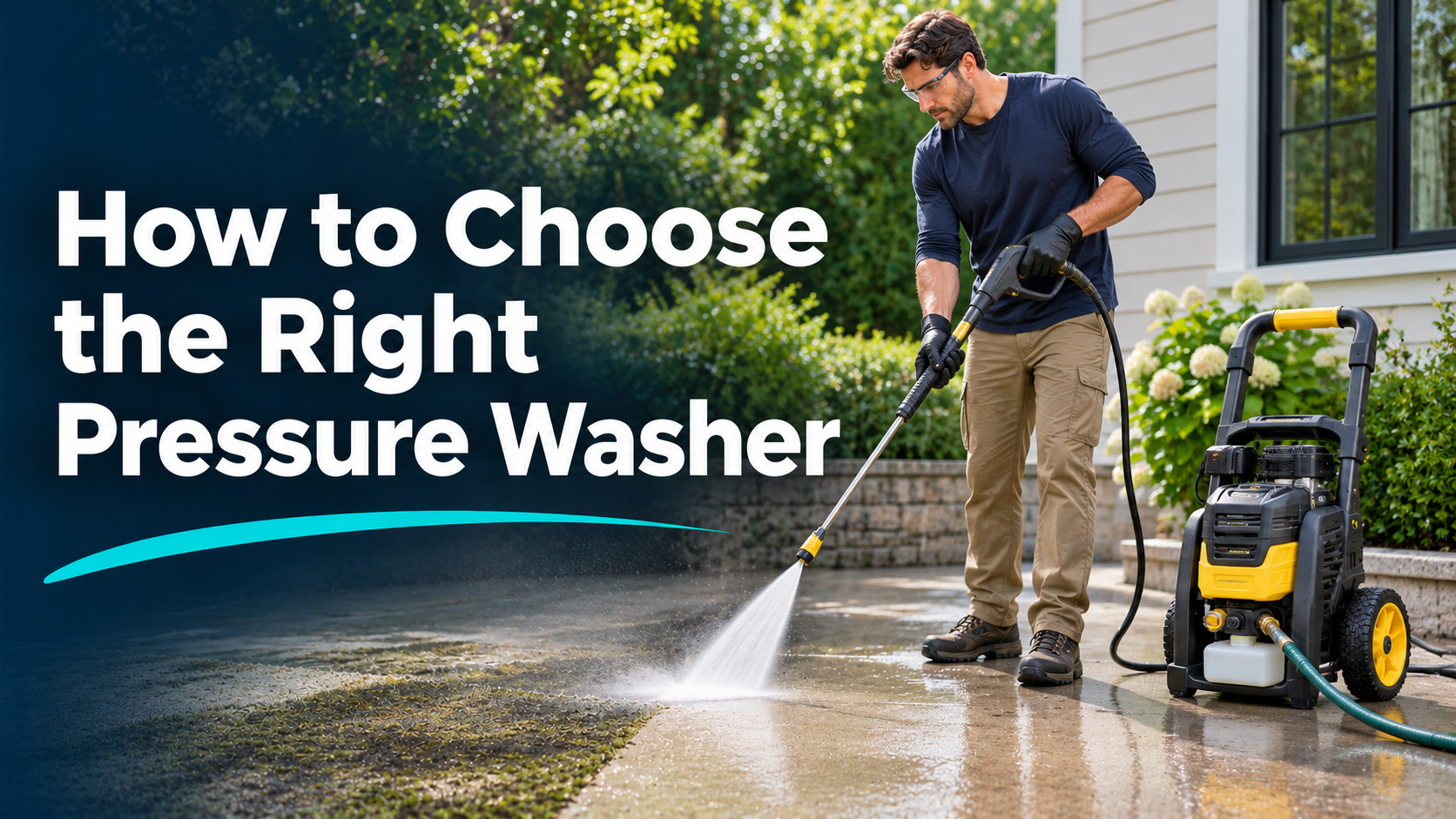
Learn how to choose the right pressure washer based on electric or gas power, PSI, water flow, nozzle options, hose length, portability, cleaning jobs, and maintenance needs.
Follow these steps at your own pace. Check product terms and prices directly with providers before purchasing.
How to Choose the Right Pressure Washer
A pressure washer can make outdoor cleaning much faster than using a garden hose and scrub brush. It can remove dirt from driveways, patios, siding, fences, outdoor furniture, vehicles, and many other surfaces. But buying the most powerful machine available is not always the best choice.
The right pressure washer depends on the jobs you plan to do, how often you will use it, how much power you actually need, and whether you prefer the convenience of an electric model or the higher output of a gas machine.
Start With the Jobs You Actually Need to Do
Before comparing specifications, make a list of the surfaces you expect to clean most often.
Light-duty jobs may include washing patio furniture, bicycles, trash cans, small decks, or vehicles. Medium-duty work can include patios, fences, siding, and residential driveways. Heavy-duty cleaning may involve large concrete surfaces, stubborn grime, farm equipment, or frequent commercial-style use.
Your intended jobs should determine the machine. Buying far more pressure than you need can increase cost, weight, noise, and the risk of damaging delicate surfaces.
Electric Versus Gas Pressure Washers
Electric pressure washers are popular for home use because they are relatively quiet, easy to start, and require little maintenance. Plug the machine into an appropriate outlet, connect the water supply, and it is generally ready to use.
They are well suited to vehicles, patios, outdoor furniture, siding, and many routine residential cleaning jobs.
Gas pressure washers usually provide more power and are not limited by an electrical cord. They can be useful for large driveways, heavy buildup, frequent use, and locations far from electrical outlets.
The tradeoff is more noise, fuel storage, engine maintenance, exhaust, and greater overall weight.
Understand PSI
PSI stands for pounds per square inch and describes the pressure of the water leaving the nozzle.
Higher pressure can help remove stubborn dirt, but more PSI does not automatically mean better cleaning for every surface. Too much pressure can damage wood, paint, siding, vehicle finishes, and other materials.
A pressure washer should always be matched to the surface and used with the appropriate nozzle and distance.
Do Not Ignore GPM
GPM stands for gallons per minute and measures how much water the pressure washer moves.
Water flow is important because it helps carry loosened dirt away from the surface. Two machines with similar PSI ratings can feel noticeably different if one has much higher water flow.
This is why experienced buyers often look at both PSI and GPM rather than judging a pressure washer by pressure alone.
Overall Cleaning Power
Some people multiply PSI by GPM to get a rough idea of overall cleaning output. This can be useful when comparing machines in the same general category.
However, real-world performance also depends on the pump, motor or engine, nozzle design, hose, and how consistently the machine maintains pressure under load.
Do not rely on one marketing number alone.
Choose the Right Nozzle
Nozzle angle has a major effect on how aggressive the water stream becomes.
A narrow spray concentrates pressure into a small area and can remove stubborn grime, but it can also damage surfaces quickly. Wider sprays cover more area and are generally safer for routine cleaning.
Many pressure washers include several color-coded nozzles for different spray angles.
If you are new to pressure washing, start with a wider nozzle and test an inconspicuous area before moving closer or switching to a more aggressive spray.
Turbo Nozzles
A turbo nozzle uses a rotating concentrated spray to provide strong cleaning action over a larger area than a fixed narrow nozzle.
It can be very effective on durable surfaces such as concrete, but it may be too aggressive for painted or delicate materials.
Pressure Hose Length
A longer pressure hose allows you to move farther from the machine without constantly repositioning it.
This is especially useful when cleaning driveways, fences, large patios, or multiple sides of a vehicle.
Check not only the included hose length but also whether compatible longer replacement hoses are available.
Power-Cord Length on Electric Models
For electric machines, cord length can be just as important as hose length.
Pressure washers can draw significant electrical power, so using an inappropriate extension cord may cause voltage drop or create a safety problem.
Follow the manufacturer's recommendations for electrical connections and outdoor use.
Detergent and Soap Systems
Some pressure washers include an onboard detergent tank, while others use a removable bottle or external foam cannon.
Detergent can make it easier to loosen grease, dirt, mildew, and road film before rinsing.
If you plan to wash vehicles regularly, check whether the washer works with the soap or foam accessories you want to use.
Surface Cleaners
A surface cleaner is a round attachment with rotating spray arms underneath. It can clean driveways, patios, and sidewalks more evenly than using a standard wand.
For people with large concrete areas, a compatible surface cleaner can be one of the most useful accessories available.
Consider the Pump
The pump is one of the most important components of a pressure washer.
Entry-level electric machines often use simpler pump designs intended for occasional residential use. More expensive gas models may use serviceable pumps designed for heavier workloads.
If you expect to use the machine frequently, pump quality and replacement-part availability become more important.
Portability Matters
A powerful pressure washer is less convenient if it is difficult to move around your property.
Look at machine weight, wheel diameter, handle design, and balance. Large wheels are useful on uneven pavement, gravel, or grass.
Compact electric models may be much easier to move and store than large gas machines.
Storage Can Be More Important Than Expected
Pressure washers come with hoses, power cords, spray guns, wands, and nozzles. If these accessories do not have dedicated storage points, the machine can become messy quickly.
Look for onboard hose storage, nozzle holders, and secure places for the spray gun and wand.
If garage space is limited, check whether the handle folds or the machine can be stored vertically.
Pressure Washers for Cars
A pressure washer can be useful for vehicle cleaning, but excessive pressure or the wrong nozzle can damage paint, trim, seals, and other components.
Use an appropriate wide spray pattern, keep a safe distance from the surface, and avoid directing concentrated pressure at damaged paint or sensitive areas.
For vehicle washing, extremely high PSI is usually unnecessary. Good water flow and compatible foam accessories may be more useful.
Pressure Washers for Concrete
Concrete is a durable surface that can benefit from stronger cleaning power, especially when dealing with old dirt or staining.
A medium- or heavy-duty pressure washer paired with a surface-cleaner attachment can make large driveways and patios much faster to clean.
Even with concrete, avoid holding a concentrated nozzle in one spot because it can leave visible lines or etching.
Pressure Washing Wood and Siding
Wood, painted surfaces, and siding require more caution.
Too much pressure can remove paint, damage soft wood fibers, force water behind siding, or create uneven marks.
Use lower pressure, a wider nozzle, greater distance, and appropriate detergent whenever possible.
Gas Pressure Washer Maintenance
Gas-powered models require more maintenance than electric machines.
Typical responsibilities may include oil checks, fuel management, spark-plug service, air-filter maintenance, and winter storage.
If you prefer equipment that can sit for months and start with minimal preparation, an electric pressure washer may be more convenient.
Winter Storage
Water left inside a pump can freeze in cold conditions and damage internal components.
If the machine will be stored where freezing temperatures are possible, follow the manufacturer's winterization instructions.
Pump-protectant products may also be recommended for seasonal storage.
Noise
Electric pressure washers are generally much quieter than gas models.
If you live in a dense neighborhood, apartment complex, or area with noise restrictions, this can be a significant advantage.
Gas machines offer more freedom and power but can be loud enough that hearing protection may be appropriate during extended use.
Common Pressure Washer Buying Mistakes
One common mistake is choosing only by PSI. High pressure can look impressive on the box, but water flow and overall machine quality matter too.
Another mistake is buying a heavy gas machine for occasional light cleaning when a smaller electric model would be easier to use and maintain.
People also sometimes overlook hose length, accessory compatibility, and onboard storage until after they start using the machine.
Finally, using too much pressure on the wrong surface can cause permanent damage. More power is useful only when it can be controlled properly.
Which Pressure Washer Is Right for You?
If you primarily wash vehicles, patios, furniture, and other routine household items, a quality electric pressure washer may provide the best balance of convenience, noise, and performance.
If you regularly clean large concrete areas, heavy equipment, or stubborn buildup, a more powerful gas model may save time.
Homeowners with large driveways should also consider whether a surface cleaner is available, because it can make a bigger difference than simply purchasing a machine with slightly higher PSI.
What to Compare Before Buying
- Electric versus gas power
- PSI rating
- GPM water flow
- Overall cleaning performance
- Included nozzle sizes
- Turbo-nozzle compatibility
- Pressure-hose length
- Electrical-cord length
- Detergent system
- Foam-cannon compatibility
- Surface-cleaner compatibility
- Pump quality
- Wheel size and portability
- Accessory storage
- Noise
- Maintenance requirements
- Replacement-part availability
- Warranty and price
The right pressure washer should make the cleaning jobs you actually perform easier without adding unnecessary weight, maintenance, or risk. For most homeowners, balancing pressure, water flow, portability, and useful accessories is more important than simply buying the machine with the biggest PSI number.
Comments
Comments are reviewed before they become public.
Sign in with Google to leave a comment.
Sign in with GoogleNo approved comments yet. Be the first to start the discussion.