How to Choose the Right Cordless Drill
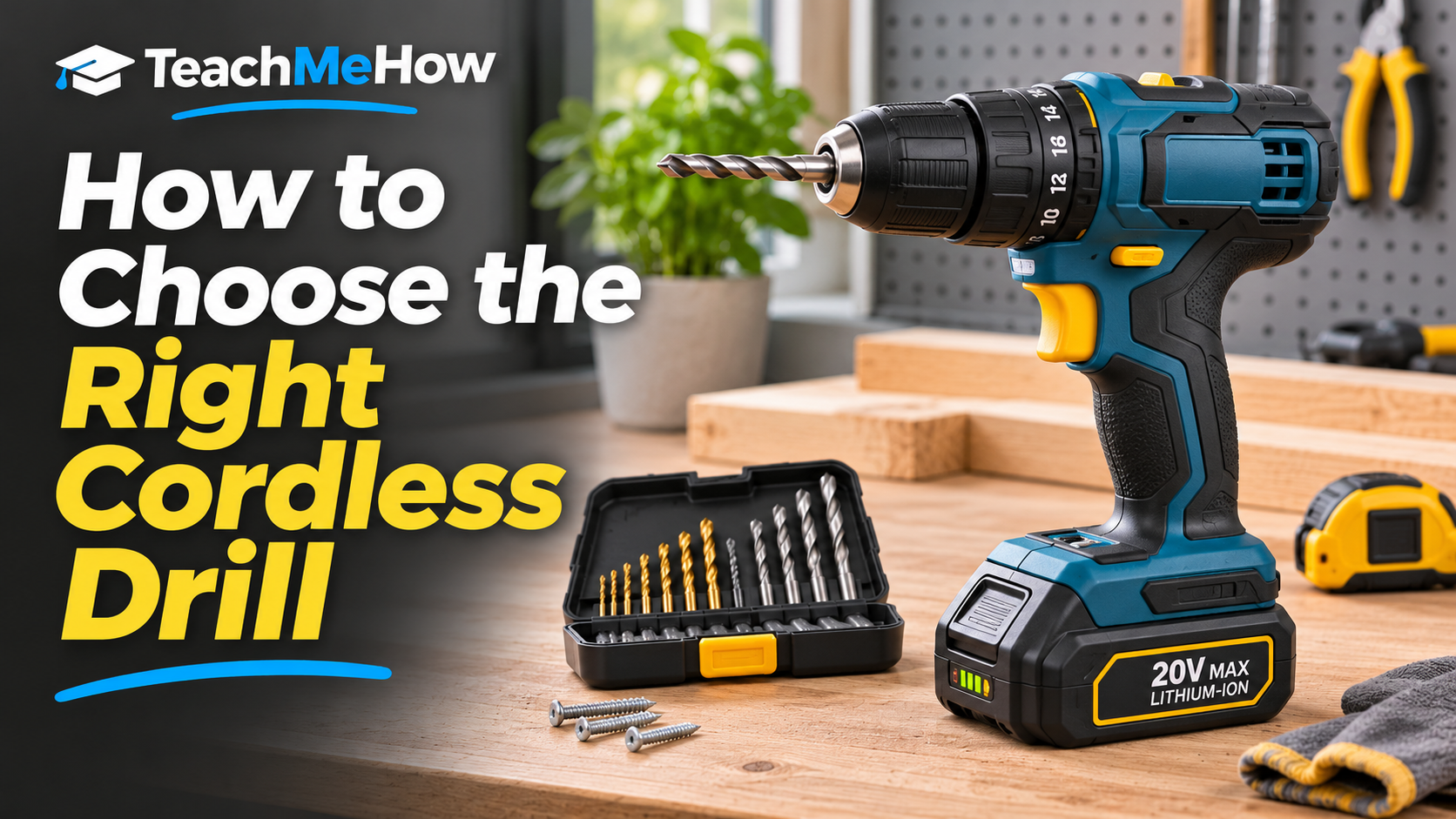
Learn how to choose the right cordless drill based on voltage, motor type, chuck size, torque, battery platform, weight, ergonomics, and typical home projects.
Follow these steps at your own pace. Check product terms and prices directly with providers before purchasing.
How to Choose the Right Cordless Drill
A cordless drill is one of the most useful tools for home repairs, furniture assembly, hanging shelves, drilling holes, and basic DIY projects. But voltage, torque, chuck size, battery systems, and included accessories can make the buying process confusing.
The right drill should have enough power for your typical projects without being heavier or more expensive than necessary.
Drill/Driver or Hammer Drill?
A standard drill/driver handles most wood, metal, and screw-driving tasks around the home. A hammer drill adds a rapid hammering action that can help when drilling into masonry such as brick or concrete.
If you rarely work with masonry, a regular drill/driver may be lighter and less expensive.
Voltage
Higher-voltage tools generally offer more power but can also be heavier. Compact 12-volt drills are convenient for light household work, while 18- or 20-volt-class tools are common for general DIY and heavier tasks.
Do not choose based on voltage alone; motor design and gearing also matter.
Brushless Motors
Brushless motors can improve efficiency, runtime, and durability compared with traditional brushed designs. They are especially attractive for people who use the tool frequently.
For occasional light use, a good brushed drill can still be perfectly adequate.
Chuck Size
A 1/2-inch chuck accepts larger drill bits and is common on full-size drills. Smaller 3/8-inch chucks are lighter and may be sufficient for basic household work.
Torque Settings
An adjustable clutch lets you control how much torque is applied when driving screws. This helps prevent overdriving or stripping fasteners.
Battery Platform
If you plan to buy more cordless tools later, the battery ecosystem can be more important than the drill itself. Batteries are often interchangeable across tools from the same platform.
Choosing a broad tool system can save money over time.
Battery Capacity
Battery capacity is usually listed in amp-hours. Higher-capacity batteries run longer but are heavier.
A small battery may be more comfortable for everyday drilling, while a larger one is useful for demanding projects.
Weight and Ergonomics
A powerful drill that feels heavy or poorly balanced can become tiring quickly. Grip shape and balance matter if you work overhead or for long periods.
Common Cordless-Drill Buying Mistakes
One mistake is buying the most powerful drill available for simple household tasks. Another is ignoring the battery platform and later ending up with several incompatible chargers and batteries.
Which Cordless Drill Is Right for You?
For most homeowners, a compact 18- or 20-volt-class drill/driver with a brushless motor, adjustable clutch, and a battery platform that supports other useful tools is a strong all-around choice.
What to Compare Before Buying
- Drill/driver or hammer drill
- Voltage class
- Brushless or brushed motor
- Chuck size
- Torque settings
- Battery ecosystem
- Battery capacity
- Weight and balance
- Included charger and accessories
- Warranty and price
Helpful tools to consider
Cordless Drills — Compare cordless drills based on voltage, motor type, chuck size, torque settings, battery platform, battery capacity, weight, ergonomics, included accessories, warranty, and price.
Product links will appear after our recommendations have been reviewed and affiliate partnerships are approved.
Disclosure: We may earn a commission from qualifying purchases made through affiliate links, at no additional cost to you. Learn more.
Comments
Comments are reviewed before they become public.
Sign in with Google to leave a comment.
Sign in with GoogleNo approved comments yet. Be the first to start the discussion.