How to Choose the Right Electric Lawn Mower
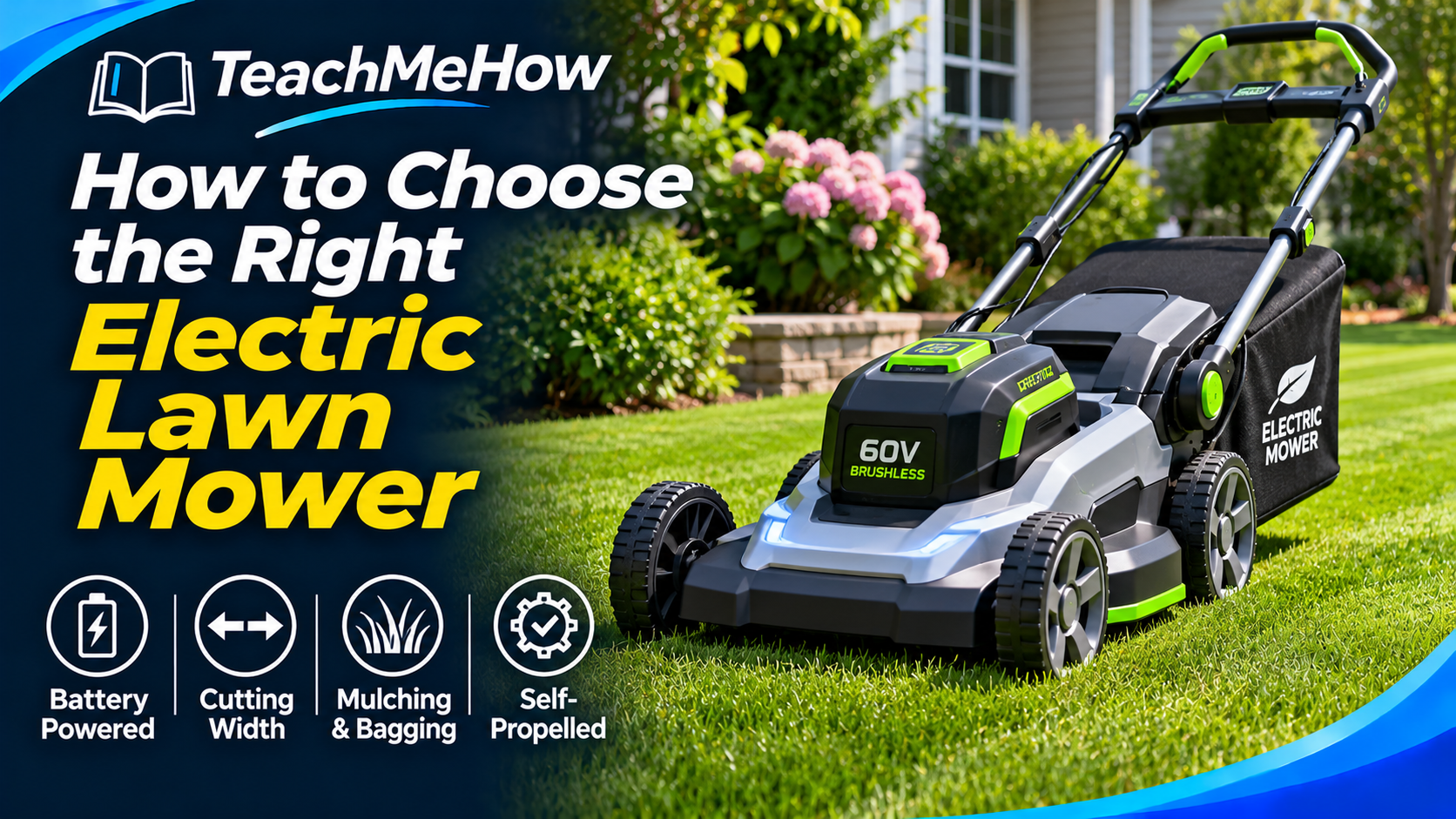
Learn how to choose the right electric lawn mower based on lawn size, battery capacity, cutting width, self-propelled drive, grass handling, storage, and battery-system compatibility.
Follow these steps at your own pace. Check product terms and prices directly with providers before purchasing.
How to Choose the Right Electric Lawn Mower
Electric lawn mowers have become a practical alternative to gasoline-powered machines for many homeowners. Modern battery models can provide enough power for typical residential lawns while producing less noise, requiring less maintenance, and eliminating the need to store gasoline.
The right mower depends on the size of your lawn, the terrain, how thick the grass becomes, how much storage space you have, and whether you already own batteries from a particular outdoor-tool system. Choosing carefully can make mowing much easier and help you avoid paying for more mower than you actually need.
Start With the Size of Your Lawn
Lawn size should be one of your first considerations because it directly affects battery requirements, cutting width, and whether a self-propelled mower is worthwhile.
A small urban lawn may be easy to maintain with a compact battery mower. A larger yard can require a wider deck, larger batteries, or a second battery so you can finish without stopping to recharge.
If your lawn has several separate areas, slopes, trees, or landscaping obstacles, maneuverability may matter as much as total square footage.
Corded Versus Battery-Powered
Corded electric lawn mowers are usually inexpensive, lightweight, and capable of running as long as they remain plugged in. They can be a good choice for very small lawns where an outdoor outlet is conveniently located.
The biggest disadvantage is the extension cord. You need to manage it while mowing and avoid running over it. Trees, garden beds, fences, and irregularly shaped lawns can make the cord inconvenient.
Battery-powered mowers eliminate the cord and provide much more freedom of movement. For most homeowners considering an electric mower today, battery operation is the more convenient option.
Understand Battery Voltage
Battery-powered mowers are sold in several voltage classes. Higher voltage can help a system deliver more power, but voltage alone does not tell you how long the mower will run or how well it will cut.
Motor efficiency, battery capacity, blade design, deck size, and grass conditions all affect real-world performance.
Do not choose a mower solely because one model advertises a larger voltage number.
Battery Capacity and Runtime
Battery capacity is commonly measured in amp-hours. Larger batteries generally store more energy and provide longer runtime, although they also add weight and cost.
Manufacturer runtime estimates can be useful, but actual mowing time depends on grass height, moisture, terrain, cutting height, self-propelled use, and how often the motor has to increase power.
If your lawn size is near the upper end of a mower's advertised range, having a second battery can provide useful insurance.
Single-Battery Versus Dual-Battery Mowers
Some electric mowers use one battery, while others use two batteries simultaneously or switch automatically between battery packs.
Dual-battery designs can provide longer runtime or greater power, but they also mean purchasing and maintaining more battery capacity.
Check whether both batteries are included with the mower because some packages may be sold with different battery combinations.
Choose the Right Cutting Width
Cutting width determines how much grass the mower cuts in each pass.
A wider deck can reduce the number of passes required on a large lawn, which may save time. However, wider mowers are heavier, require more storage space, and can be harder to maneuver around trees and narrow passages.
For a small or complicated yard, a narrower mower may actually be easier to use even if it requires a few additional passes.
Self-Propelled Versus Push Mowers
A push mower moves only when you provide the force. This keeps the machine simpler, lighter, and usually less expensive.
A self-propelled mower uses the motor to help drive the wheels. This can significantly reduce effort on hills, larger lawns, or when the grass bag becomes heavy.
The tradeoff is additional battery consumption. If your lawn is small and flat, you may not need self-propelled assistance.
Variable-Speed Self-Propulsion
If you choose a self-propelled mower, look at how the speed is controlled.
Some models use a lever or dial, while others automatically respond to how quickly you push the handle.
A wide speed range can be useful because you may want to slow down in thick grass or around obstacles and move faster across open sections.
Bagging, Mulching, and Side Discharge
Most modern lawn mowers support one or more methods of handling grass clippings.
Bagging collects clippings for disposal and can leave the lawn looking very clean. Mulching cuts the clippings into smaller pieces and returns them to the lawn. Side discharge sends clippings out of the mower and can be useful when the grass is taller or heavier.
If you regularly switch between these methods, choose a mower that makes the conversion simple.
Mulching Performance
Not all mowers mulch equally well. Blade shape, deck design, motor power, and airflow all affect how finely the mower cuts the grass.
If mulching will be your primary method, look for reviews that specifically discuss clipping quality rather than assuming every mower performs the same.
Cutting-Height Adjustment
Different grass types and seasons may require different cutting heights.
Some mowers require adjusting each wheel individually. Others use a single lever to raise or lower the entire deck.
A single-point adjustment system can save time and make it easier to change height frequently.
Motor Power and Automatic Adjustment
Many battery mowers can automatically increase motor speed when they encounter thicker grass and reduce power when conditions are easier.
This helps balance cutting performance with battery runtime.
If your lawn frequently becomes thick or grows quickly, good automatic power management can be more useful than having the mower run at maximum speed constantly.
Wet and Overgrown Grass
Any lawn mower can struggle when grass is extremely wet or overgrown. Wet clippings may stick to the deck, clog the discharge path, and make the mower work harder.
Electric mowers may consume battery more quickly under these conditions.
Whenever practical, mow when the grass is reasonably dry and avoid removing too much height in a single pass.
Weight and Maneuverability
Electric mowers are often easier to handle than traditional gasoline models, but weight still varies considerably.
A lightweight mower is easier to turn, transport, and push into storage. Larger batteries, steel decks, and self-propelled systems add weight.
Wheel size also matters, especially on uneven ground.
Plastic Versus Steel Decks
Some electric lawn mowers use steel decks, while others use durable composite or plastic materials.
Steel feels traditional and can be very durable, but it adds weight and can eventually rust if the finish becomes damaged.
Composite decks are lighter and do not rust, although construction quality varies by manufacturer.
Neither material is automatically superior for every user.
Storage Features
One advantage of many electric mowers is that they can be stored vertically because they do not contain gasoline or engine oil.
Folding handles and vertical storage can dramatically reduce the amount of garage or shed space required.
If storage space is limited, check the mower's folded dimensions before purchasing.
The Battery Ecosystem Can Be Very Valuable
The mower may be the most expensive outdoor tool you buy, but the batteries can often be used with other equipment from the same manufacturer.
Common compatible tools include string trimmers, leaf blowers, hedge trimmers, chainsaws, pole saws, and snow blowers.
If you plan to build a collection of cordless outdoor tools, choosing the right battery platform can save money over time because you may be able to share batteries and chargers between products.
Check Replacement-Battery Prices
Large mower batteries can be expensive. Before committing to a system, check how much replacement batteries cost and whether several capacities are available.
A mower that seems inexpensive may become less attractive if replacement batteries are unusually costly.
Also consider the battery warranty, since batteries may have different coverage from the mower itself.
Charging Time
Charging speed becomes important when a single battery cannot finish the entire lawn.
A fast charger can allow you to recharge during a break, while a slower charger may require several hours.
Some mower packages include rapid chargers, while others include standard chargers, so check what comes in the box.
Noise
Electric lawn mowers are generally much quieter than gasoline-powered machines.
This can make mowing more comfortable and reduce disturbance for neighbors, especially during mornings or evenings.
They are not silent—the blade and airflow still make noise—but the lack of a gasoline engine makes a noticeable difference.
Maintenance
Electric lawn mowers require relatively little routine maintenance. There is no engine oil, spark plug, carburetor, or gasoline to manage.
You still need to keep the blade sharp, clean grass buildup from the deck, inspect the wheels, and store the batteries properly.
This reduced maintenance is one of the strongest reasons many homeowners choose electric equipment.
Common Electric Lawn Mower Buying Mistakes
One common mistake is underestimating battery needs. A mower that barely covers your lawn under ideal conditions may struggle when the grass is tall or damp.
Another mistake is choosing a very wide mower for a yard filled with tight spaces and landscaping obstacles.
People also sometimes overlook replacement-battery cost and commit to a battery platform without checking what other tools are available.
Finally, do not assume that self-propelled drive is necessary for every lawn. On a small flat yard, a lighter push mower may actually be easier to use.
Which Electric Lawn Mower Is Right for You?
For a small, flat lawn, a lightweight push mower with one good battery may provide everything you need.
For a medium-size yard, a wider cutting deck and larger battery can reduce mowing time. A second battery can provide additional confidence during heavy growing seasons.
For larger properties or slopes, a self-propelled model with substantial battery capacity can make the job much easier.
If you plan to buy additional outdoor equipment, give serious consideration to the manufacturer's battery ecosystem before making the final decision.
What to Compare Before Buying
- Lawn size
- Corded versus battery operation
- Battery voltage
- Battery capacity
- Estimated runtime
- Single- or dual-battery operation
- Charging time
- Cutting width
- Push versus self-propelled drive
- Self-propelled speed control
- Bagging capability
- Mulching performance
- Side-discharge option
- Cutting-height range
- Height-adjustment system
- Deck material
- Weight and maneuverability
- Folding and vertical storage
- Battery ecosystem
- Replacement-battery cost
- Warranty and total price
A good electric lawn mower should have enough battery capacity and cutting performance to finish your lawn without making the machine unnecessarily heavy or expensive. Matching the mower to your property—and thinking about the battery system as a long-term investment—can make electric lawn care both convenient and economical.
Comments
Comments are reviewed before they become public.
Sign in with Google to leave a comment.
Sign in with GoogleNo approved comments yet. Be the first to start the discussion.