Give closed paper files a stable box number, map each project to its shelf location, and test retrieval before clearing space in the active drawer.
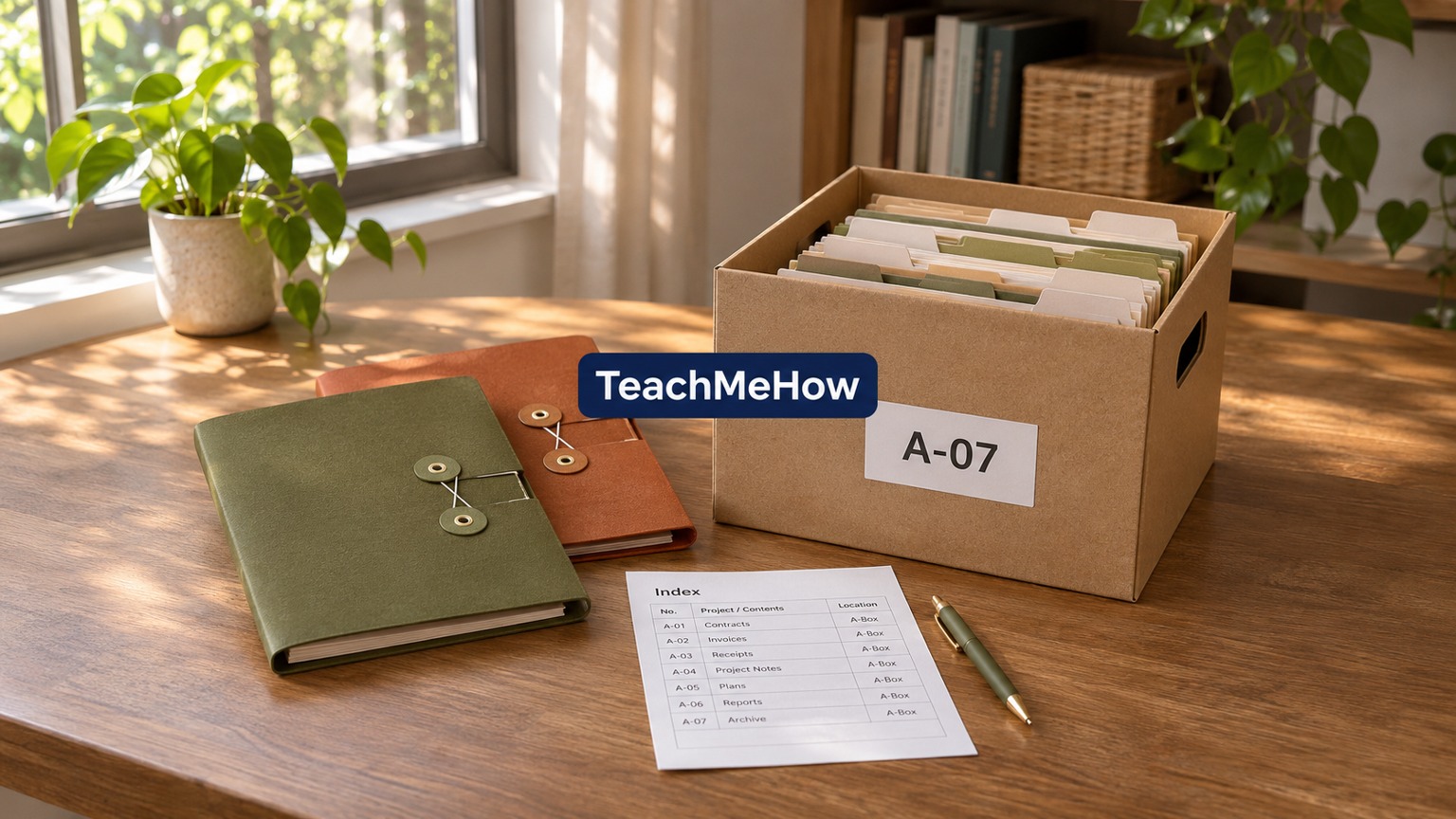
Quick answerGive each storage box a permanent ID, write that ID on two visible faces, and index each closed project against it. Keep the shelf location in a separate index field. When a box moves, you can update one location entry and still find every project inside by its original name or number.
Agree on what “closed” means
Review one project before packing a whole drawer. Is there an outstanding approval, a document still on loan, or a final action no one owns? Return open work to an active folder or assign the outstanding action and leave a clear pointer. Closing a box is a storage decision. Use the retention and access rules that apply to your records when deciding what may be moved or disposed of.
Put your supplies on a clear table. You need a box that fits the documents and the shelf, labeled inner folders, a marker or large labels, and a paper or electronic index available to the people who need it. If the drawer contains legal-size paperwork, test the actual longest folder in the intended box orientation before assembly of the rest of the cartons.
1. Give the first box a stable identity
Use a sequence such as A-001, A-002, and A-003. Check the index before issuing the next ID. Write it on the short end facing the aisle and an adjacent face. Keep the identifier on the body as well as any lid label because similar lids can get swapped. A box named “top shelf” becomes hard to track as soon as the shelf changes.
2. Preserve each project’s working identity
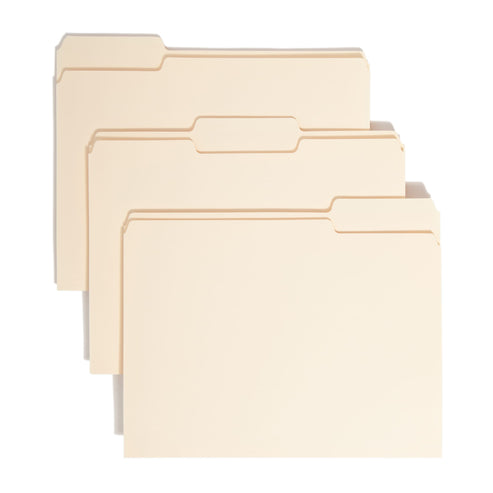
Read the label from its active project packet and keep the same project ID. Replace a torn folder or add a larger envelope if needed, transferring the label before moving the contents. Record the close date and a recognizable project description. Keep confidential details inside when the boxes will be visible to people who do not need the names.
3. Build two short lookup lists
In the project list, record project ID, searchable name, close date, and box ID. In the box list, record box ID, room, shelf or bay, and position. A small collection can keep both lists on one sheet with clearly labeled sections. Make access practical from outside the storage room. An index that lives only in the bottom box defeats much of its purpose.
4. Load, label, and retrieve a test file
Stand folders consistently so their labels can be read. Leave room to pull one packet without lifting the entire row. Follow the box maker’s setup and loading directions and your shelf’s load limits. Shut the lid without bending tabs. Ask someone to find a project from its name, remove it, and return it. Observe which information they actually needed.
A worked index entry
| Lookup | Example entry |
|---|
| Project | 241 / Oak Street lunch menus / closed May 30 / box A-007 |
| Box | A-007 / office storeroom / shelving unit B / shelf 2 |
| Another project in the same box | 252 / Oak Street catering cards / closed June 4 / box A-007 |
| After the box moves | Change the A-007 location entry to shelving unit C, shelf 1. |
A colleague asking for “Oak Street” now gets two candidates and can choose by description and ID. If a later carton also contains Oak Street work, add those project rows to the index. Avoid assigning a client to one box forever when its projects may close years apart. If one project spans two boxes, identify both boxes and the section or date range inside each.
Borrowing or reopening archived work
Use an out guide and a checkout record when a packet leaves the box. Keep the box ID in the checkout entry so a different coworker can refile it. If a project reopens for several weeks, update its current status and location in the index. Leave a pointer in the archive until everyone knows where the working file now lives.
Inspect the boxes you can reach safely for crushed corners, dampness, or unreadable labels. Move or rehouse affected papers using your records process. Do not treat a date on a carton as an instruction to discard its contents. For a practical finish, choose a project that someone else packed and time one retrieval. If they must open several boxes, tighten the project description or correct the location entry while the trail is fresh.
Comments
Comments are reviewed before they become public.
Sign in with Google to leave a comment.
Sign in with GoogleNo approved comments yet. Be the first to start the discussion.