Learn when to use a level-rim dry cup or a graduated liquid jug, and which handle, markings, and sizes are worth checking.
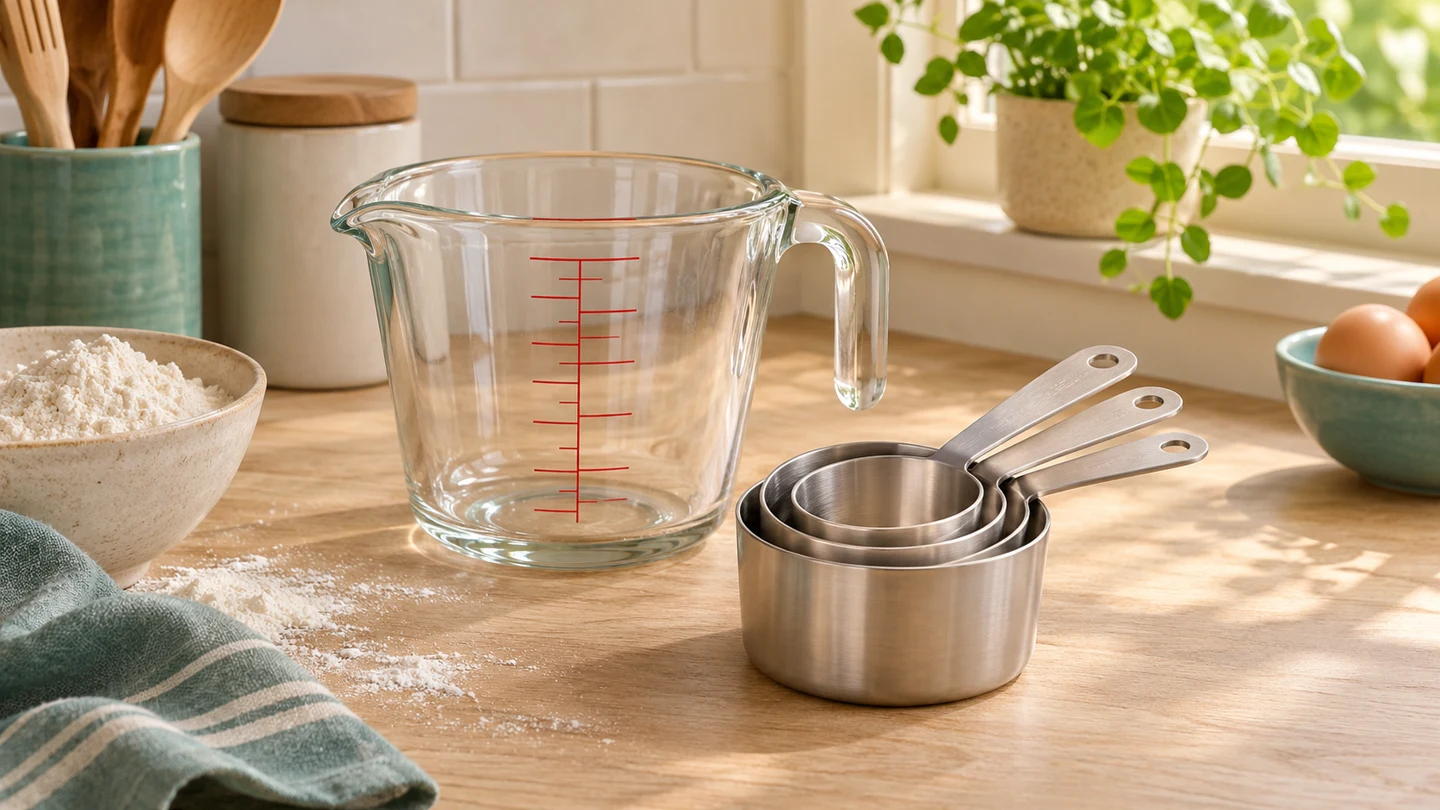
Quick AnswerA nested set of flat-rimmed dry cups and one clear liquid jug cover most recipes written in cups. Choose dry cups you can level in one pass and a jug whose smallest marked interval suits your usual pour.
Compare Your Options
| Type | Best for | What to check |
|---|
| Nested dry cups | Flour, oats, and sugar | Level rims and handles that resist bending |
| Graduated liquid jug | Milk, stock, and oil | Readable marks and room above the top line |
| Angled liquid cups | Measuring on the counter | Legible markings from above |
1. Match the cup to the ingredient
Dry cups are filled to the rim, so a straight edge can sweep excess flour back into the bin. A liquid jug leaves room above the measurement line. That extra space lets you carry half a cup of stock to the pan without balancing a brim-full cup.
2. Check the markings you use most
Find both one-third cup and the smallest quantity you regularly pour on a product photo. Large jugs often have widely spaced marks near the top and few useful marks near the bottom. If your recipes use milliliters, look for a separate metric scale.
3. Look at the handle, spout, and nesting depth
A dry cup should rest flat when empty and its handle should clear the rim for leveling. For a jug, check that your fingers fit inside the handle and that the spout directs a thin stream. Include the handle and spout when measuring shelf space.
Buying tipFor flour, follow the recipe’s filling method. Scooping straight from a compacted bin can pack more flour into the same cup than spooning it in and leveling the top.
What to Choose for Your Kitchen
| When you’re cooking | Look for |
|---|
| Baking with US cup measures | A nested dry set that includes quarter, third, half, and one cup |
| Adding stock in stages | A clear jug with a spout and readable increments |
| Reading small pours from above | A small angled measuring cup |
Common Mistakes
- Reading the liquid level while holding the jug at an angle.
- Using one large jug for a tablespoon of liquid.
- Assuming every recipe uses the same definition of a cup when it also gives milliliters.
Before You Buy: A Quick Checklist
- I have a way to level dry ingredients.
- I can read the smallest amount my recipes call for.
- The jug and nested cups fit where I will store them.
Bottom Line
Buy for the two motions you use most: leveling dry ingredients and pouring liquids. A well-sized pair of tools covers more recipes than a large set of near-duplicate cups.


Comments
Comments are reviewed before they become public.
Sign in with Google to leave a comment.
Sign in with GoogleNo approved comments yet. Be the first to start the discussion.