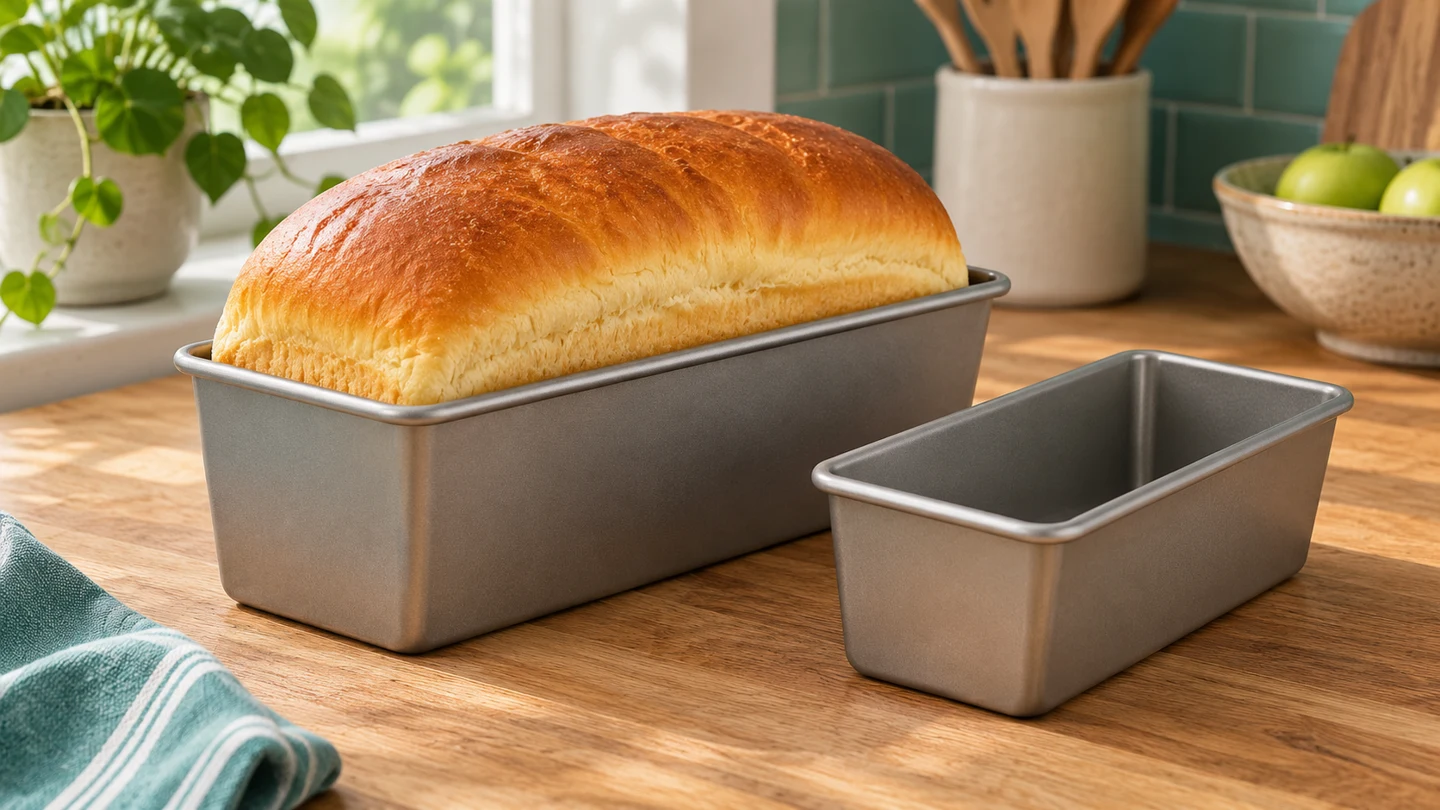
Choose a loaf pan by its inside dimensions, material, and side profile for sandwich bread, banana bread, and other quick breads.
Quick AnswerMatch the inside measurements printed in your recipe first. An 8½-by-4½-inch pan and a 9-by-5-inch pan can give the same batter different heights. A light metal pan is a versatile starting point. Cast iron suits a baker who wants a substantial pan and a well-browned crust.
Compare Your Options
| Type | Best for | What to check |
|---|
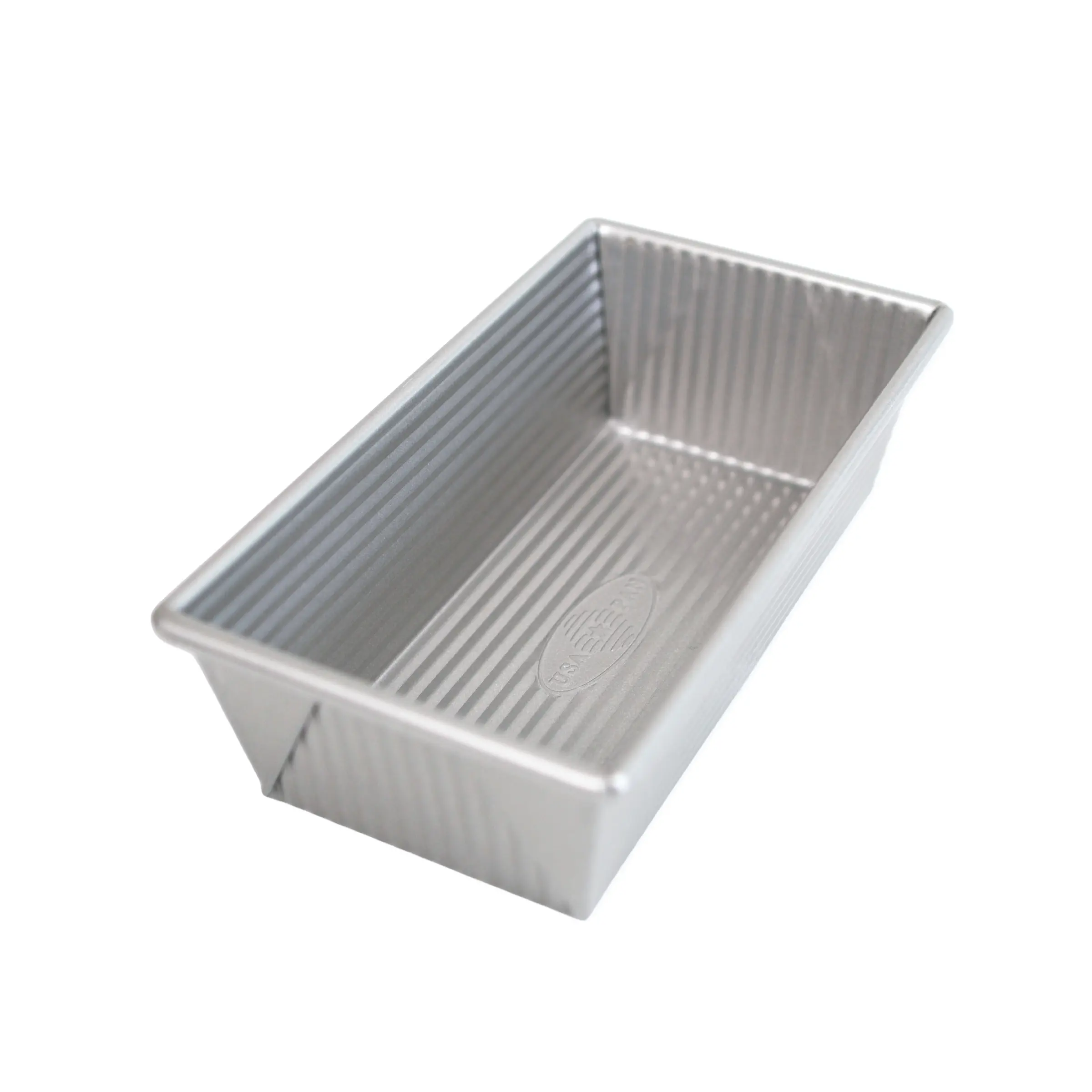
| Light metal loaf pan | Sandwich bread and quick breads | Inside dimensions measured at the top |
| Cast iron loaf pan | A robust crust and substantial sidewalls | Loaded weight and grip space |
| Lidded Pullman pan | A square-sided sandwich loaf | Recipe dough weight and clearance for the lid |
1. Read the recipe before the pan label
A pound designation is a product size convention. It does not tell you exactly how much banana-bread batter to pour in. Check the recipe’s specified pan width, length, and depth. A wider pan spreads the same mix into a shallower layer, which can change the loaf’s shape and baking time.
2. Look at the taper and corners
Sloping sides release a quick bread readily but make the bottom slice narrower than the top. Square sides make a more uniform sandwich profile. A lid is useful for a Pullman loaf only when the dough quantity and proofing instructions are intended for that pan.
3. Think through lifting and releasing the loaf
A light pan is easy to tip onto a rack. Cast iron is heavier and needs a secure grip at both ends. If you use a parchment sling, check that the paper can extend above opposite sides without interfering with a lid. Follow the maker’s care instructions for seasoned iron or a nonstick finish.
Buying tipMeasure a favorite pan on the inside with a ruler across its opening. For tapered sides, also measure the bottom. Those two measurements explain why two loaves with similar tops can give very different slices.
What to Choose for Your Kitchen
| When you’re cooking | Look for |
|---|
| Sandwich bread for a lunchbox | Straight sides and the pan size in your recipe |
| Banana bread or pound cake | A pan with room for the recipe’s intended rise |
| A compact, square sandwich loaf | A matching Pullman pan and lidded-loaf recipe |
Common Mistakes
- Using outside measurements that include handles as baking dimensions.
- Trading a small pan for a larger one without checking the loaf earlier.
- Choosing heavy cast iron before checking how it feels to lift when full.
Before You Buy: A Quick Checklist
- The pan matches my recipe’s inside dimensions.
- The side profile gives the slice shape I want.
- I can lift and release a full loaf comfortably.
Bottom Line
Match the recipe’s pan size before spending more on a finish or material. Getting the footprint right does the most to preserve the loaf height and slice shape you expect.

Comments
Comments are reviewed before they become public.
Sign in with Google to leave a comment.
Sign in with GoogleNo approved comments yet. Be the first to start the discussion.