Compare digital and mechanical luggage scales by handle fit, capacity, weight hold, and how easy they are to pack.
Quick AnswerFor most trips, choose a compact digital luggage scale with a weight-hold display, a strap that fits your suitcase handle, and capacity above your heaviest packed bag. If you prefer to skip batteries, look for a mechanical scale with a pointer that stays in place after you set the bag down.
Compare Luggage Scale Types
| Type | Best for | What to check |
|---|
| Digital strap scale | Frequent travel and soft or wide handles | Strap opening, hold function, and battery type |
| Digital hook scale | Bags with a narrow, rigid carry handle | Hook opening and how steadily the handle sits in it |
| Mechanical dial scale | Occasional travel and battery-free packing | Dial readability, zero adjustment, and hold pointer |
1. Check the Bag Limits for Your Booking
Look up the allowance for each bag on your actual itinerary. Carriers can use different rules for checked bags and carry-ons, and limits can vary by ticket or route. Choose a scale rated above the heaviest bag you expect to weigh, and leave a little room below the airline’s limit when packing.
2. Make Sure the Attachment Fits Your Handle
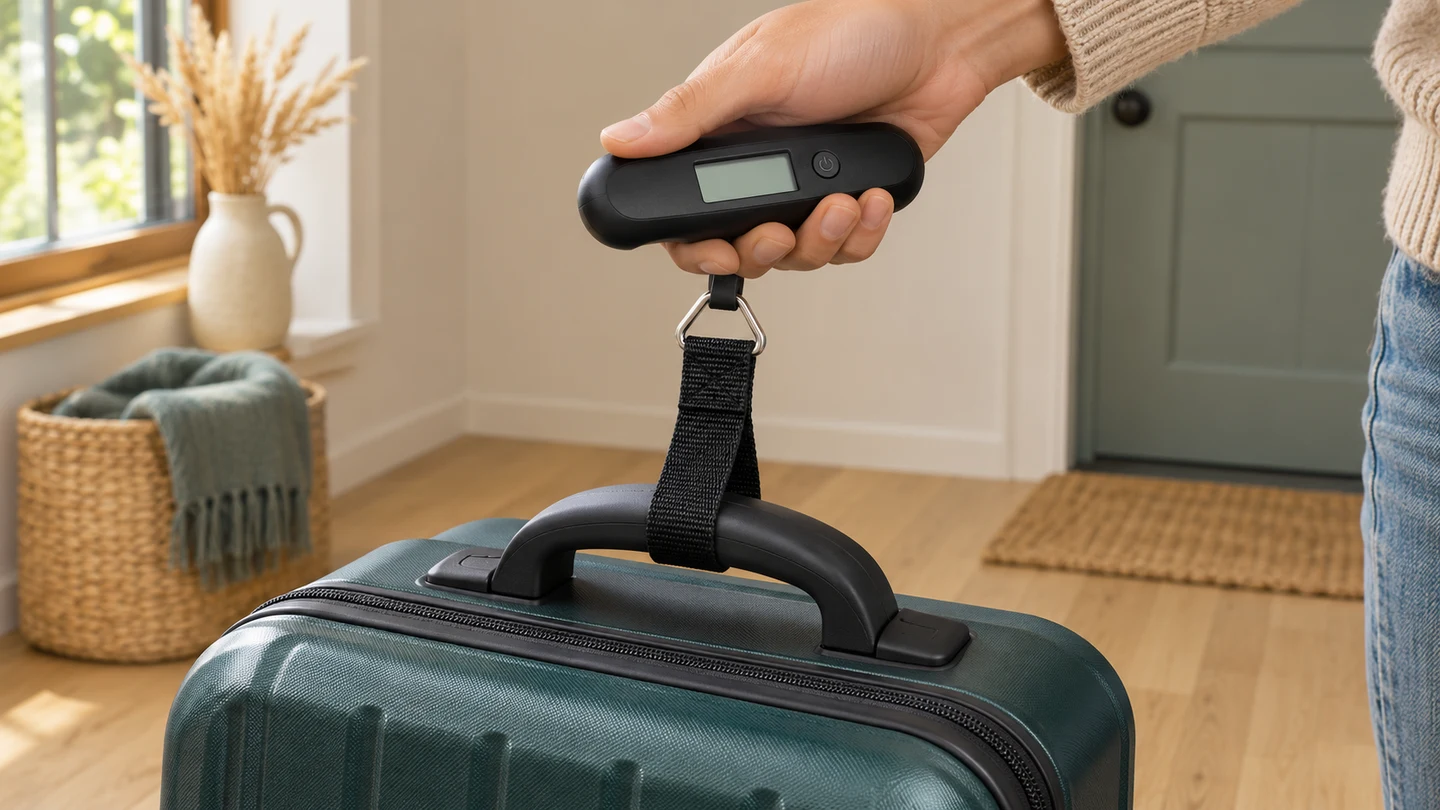
A loop strap wraps around many padded carry handles. A hook is quicker on some narrow handles but may sit awkwardly on a wide one. Check that the bag can hang straight from its carry handle with the attachment fully seated.
3. Choose a Readout You Can See After Lifting
A digital hold function keeps the last stable reading visible after you lower the suitcase. A mechanical scale with a second pointer can do the same job without batteries. If your airline lists limits in kilograms, check that the scale displays kilograms as well as pounds.
4. Think About How You’ll Pack and Use It
A compact scale fits easily in a suitcase pocket for the return trip. Compare grip width and battery availability if you travel often. If the bag is awkward to lift or hold steady, use a platform luggage scale instead, where available.
Buying tipZero the scale with the bag detached. Lift until the bag hangs freely without touching the floor, then lower it once the reading holds. If two readings differ, weigh it again and use the higher reading when deciding how much to unpack.
What to Buy for Your Trip
| Trip or bag | Look for |
|---|
| International travel | Clear pounds and kilograms settings |
| Soft duffel with a padded handle | A secure loop strap with room around the handle |
| Infrequent travel | A battery-free dial with a hold pointer |
| Frequent return trips with extra purchases | A compact digital scale with a hold display and replaceable battery |
Common Mistakes
- Confusing the scale’s maximum load with the airline’s baggage allowance.
- Taking a reading while a wheel is still touching the floor.
- Reading the wrong unit.
- Packing to the exact limit and leaving no room for differences between scales.
Before You Buy
- Check your airline’s limits and units.
- Confirm the scale’s capacity and attachment fit.
- Look for a hold display or pointer.
- Check how to zero the scale and change its battery, if it has one.
- Make sure the grip is comfortable for short lifts.
Bottom Line
A compact digital strap scale is a good fit for most travelers. Choose a mechanical dial if you want to skip batteries, and leave a little weight below the airline’s limit when you pack.


Comments
Comments are reviewed before they become public.
Sign in with Google to leave a comment.
Sign in with GoogleNo approved comments yet. Be the first to start the discussion.