How to Choose the Right Humidifier
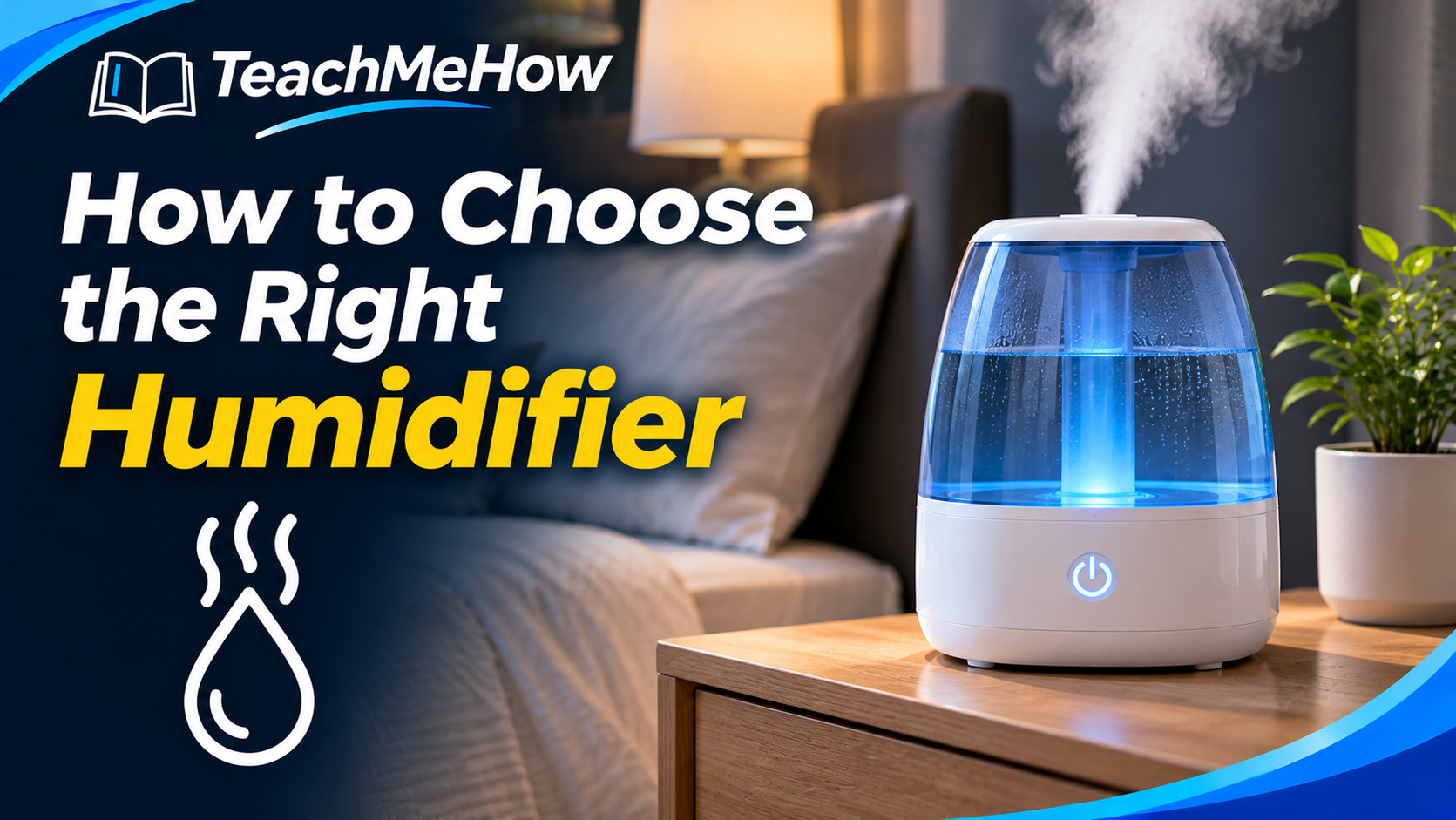
Learn how to choose the right humidifier based on room size, mist type, tank capacity, runtime, noise level, cleaning requirements, humidity controls, and filter costs.
Follow these steps at your own pace. Check product terms and prices directly with providers before purchasing.
How to Choose the Right Humidifier
Dry indoor air can make a room feel uncomfortable, especially during winter or in climates where heating systems run for long periods. A humidifier adds moisture to the air and can help make bedrooms, living spaces, and home offices feel more comfortable when indoor humidity becomes too low.
Choosing a humidifier is not simply a matter of buying the largest tank available. Room size, mist type, noise, cleaning requirements, water quality, runtime, and humidity controls all affect how practical the machine will be in everyday use.
Start With the Size of the Room
Humidifiers are designed to handle different room sizes. A small bedside model may work well in a bedroom but struggle in a large open living room.
Measure the approximate square footage of the room and compare it with the manufacturer's recommended coverage area. If the room has very high ceilings or connects openly to another space, you may need more output than the basic square footage suggests.
Buying a humidifier that is too small can mean running it continuously without reaching the humidity level you want.
Cool Mist Versus Warm Mist
One of the first choices is whether you want a cool-mist or warm-mist humidifier.
Cool-mist models release room-temperature moisture and are widely used because they can humidify efficiently without heating the water. They are commonly available in both ultrasonic and evaporative designs.
Warm-mist humidifiers heat water before releasing moisture into the room. Some people prefer the warmer vapor during cold weather, but these models use more electricity because they must heat the water.
If children or pets are present, consider placement carefully with any device that heats water because hot surfaces or steam can present a burn risk.
Ultrasonic Humidifiers
Ultrasonic humidifiers use high-frequency vibrations to turn water into a fine mist. They are popular because they are usually very quiet and can provide strong output from a relatively compact machine.
The main consideration is water quality. Minerals in tap water can sometimes be released into the room as fine white dust. Using distilled or demineralized water can reduce this problem.
Evaporative Humidifiers
Evaporative humidifiers use a fan to pull air through a wet wick or filter. As air moves through the damp material, moisture evaporates into the room.
These models may produce more fan noise than ultrasonic humidifiers, but the wick can help trap some minerals before they enter the air.
The tradeoff is that filters or wicks may need regular cleaning or replacement, adding an ongoing maintenance cost.
Tank Capacity and Runtime
Tank size determines how often you need to refill the humidifier, but tank capacity should be considered together with output.
A large tank can be convenient for overnight use or for people who do not want to refill the machine several times a day. However, a large tank can also become heavy and awkward when filled with water.
Look at both the tank size and the advertised runtime. Higher mist settings will usually shorten the total operating time between refills.
Look for an Adjustable Humidistat
A humidistat measures indoor humidity and allows the humidifier to adjust operation automatically.
Without a humidistat, you may need to monitor humidity yourself and manually turn the machine down or off. A model with automatic control can help prevent the room from becoming excessively humid.
More humidity is not always better. Excess moisture can create condensation and encourage unwanted growth on walls, windows, and other surfaces.
Noise Matters in Bedrooms
If the humidifier will run next to your bed, noise can become a major consideration.
Ultrasonic models are often quieter because they do not rely on a large fan. Evaporative units may produce a steady fan sound that some people find relaxing and others find distracting.
Also check whether the display or indicator lights can be dimmed. A bright control panel can be surprisingly annoying in a dark bedroom.
Cleaning Is One of the Most Important Features
A humidifier constantly holds water, which means regular cleaning is essential. Water left sitting in a tank can develop mineral buildup or unwanted biological growth over time.
Look for a tank with a wide opening that allows you to reach inside. Removable lids, simple water pathways, and dishwasher-safe components can make routine maintenance much easier.
A humidifier that is difficult to clean may eventually stop being used simply because maintenance becomes frustrating.
Consider the Water You Will Use
Tap water contains different amounts of minerals depending on where you live. In ultrasonic humidifiers, those minerals may appear as white dust on nearby furniture.
If you have hard water, you may prefer distilled water, a demineralization cartridge, or an evaporative model that uses a wick.
Check the manufacturer's recommendations before using additives, essential oils, or other substances in the tank. Many humidifiers are designed for water only.
Automatic Shutoff
A useful safety feature is automatic shutoff when the water tank becomes empty. This allows the unit to stop operating without requiring you to monitor it constantly.
This is especially valuable for overnight operation or when the humidifier runs while you are away from the room.
Top-Fill Versus Removable Tank Designs
Some humidifiers allow you to pour water directly into the top of the machine. Others use a removable tank that you carry to a sink.
Top-fill designs can be convenient if the machine stays in one location. Removable tanks may be easier to rinse thoroughly, depending on their shape.
Think about where the humidifier will be placed and how far you will need to carry water for refilling.
Filters and Replacement Costs
Some humidifiers require replacement wicks, filters, or demineralization cartridges. These parts add to the long-term cost of ownership.
Before buying, check how frequently replacement parts are recommended and whether they are easy to find.
A less expensive humidifier can become more costly over time if it requires frequent proprietary replacement filters.
Common Humidifier Buying Mistakes
One common mistake is choosing a model based only on tank size without considering room coverage or output.
Another is ignoring cleaning requirements. A complicated tank with narrow openings can make regular maintenance much more difficult than expected.
People also sometimes run humidifiers continuously without checking indoor humidity. Too much moisture can create its own problems, so automatic control or a separate humidity meter can be useful.
Which Humidifier Is Right for You?
For a bedroom, quiet operation, easy cleaning, and enough runtime to last through the night are usually the most important features.
For a larger living area, room coverage and output become more important. If you have hard water, pay attention to mineral buildup and filter requirements.
If you want the least manual adjustment, choose a model with a reliable humidistat and automatic controls.
What to Compare Before Buying
- Recommended room size
- Cool-mist versus warm-mist operation
- Ultrasonic versus evaporative design
- Water-tank capacity
- Runtime
- Adjustable humidistat
- Noise level
- Night-mode and display controls
- Ease of cleaning
- Top-fill or removable-tank design
- Filter or wick replacement costs
- Automatic shutoff
- Water-quality requirements
- Warranty and price
The best humidifier is one that provides enough moisture for the room while remaining easy to refill, clean, and control. Paying attention to maintenance and humidity control before buying can make a much bigger difference than simply choosing the machine with the largest tank.
Comments
Comments are reviewed before they become public.
Sign in with Google to leave a comment.
Sign in with GoogleNo approved comments yet. Be the first to start the discussion.