How to Choose the Right Dehumidifier
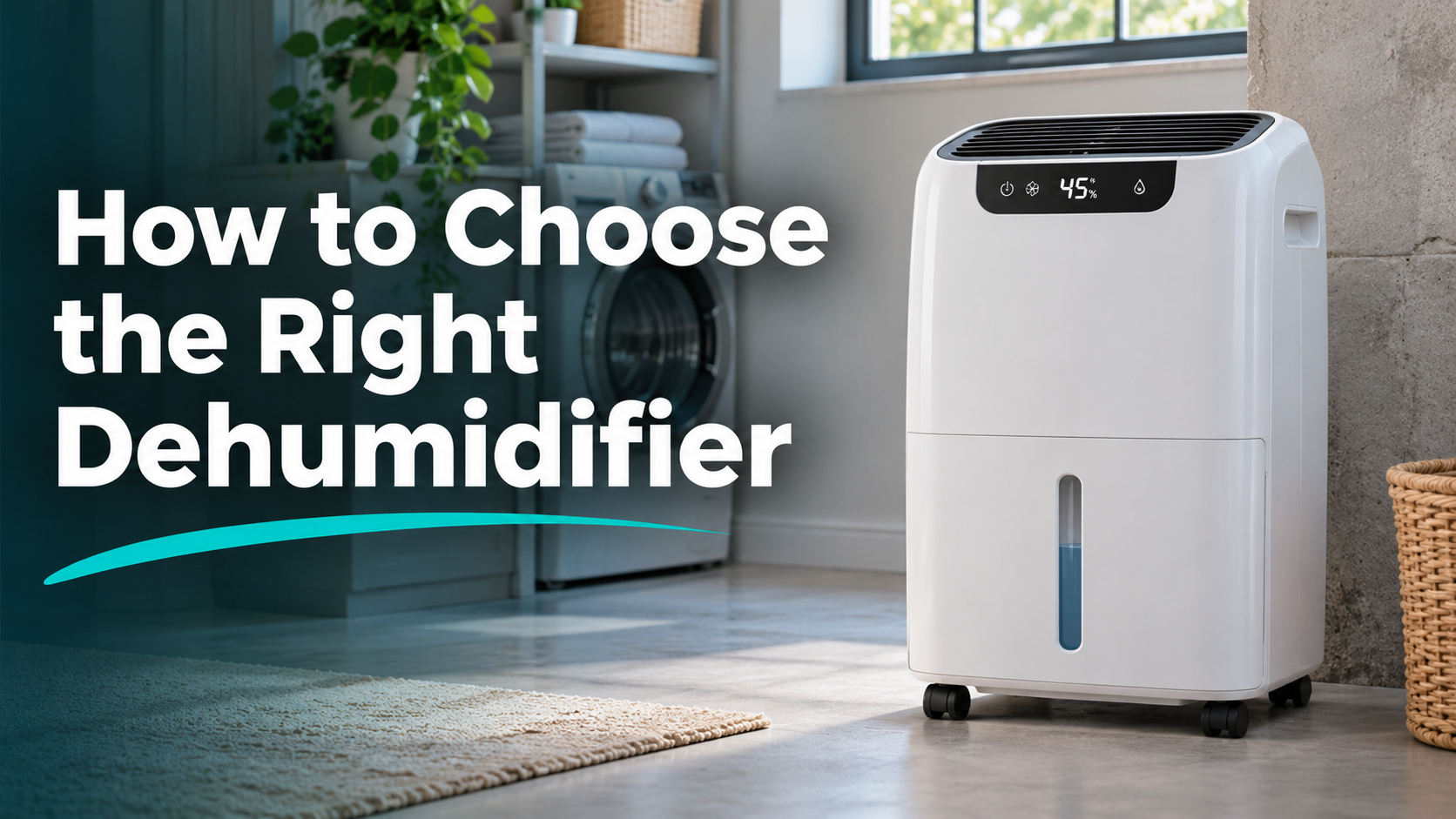
Learn how to choose the right dehumidifier based on room size, moisture level, removal capacity, tank size, drainage options, noise, humidity controls, and energy use.
Follow these steps at your own pace. Check product terms and prices directly with providers before purchasing.
How to Choose the Right Dehumidifier
Excess moisture can make a room feel uncomfortable, create condensation on windows, leave basements smelling damp, and encourage mold and mildew growth when conditions remain humid for long periods. A dehumidifier helps by pulling moisture from the air and collecting or draining the water away.
The challenge is choosing a model that is powerful enough for the space without buying something unnecessarily large, noisy, or expensive to operate. Room size matters, but the severity of the moisture problem, drainage options, noise, and automatic controls are just as important.
Start With the Size of the Space
The first step is to estimate the square footage of the room or area where the dehumidifier will operate. A bedroom, bathroom, basement, garage, and large open living area can require very different levels of moisture removal.
Measure the length and width of the space and multiply them to estimate the square footage. If the area has unusually high ceilings or connects openly to other rooms, you may need more capacity than the basic floor measurement suggests.
Think About How Damp the Room Really Is
Two rooms of the same size can need very different dehumidifiers. One may simply feel humid during summer, while another may have visible condensation, damp walls, or a musty smell throughout the year.
If the room is only mildly humid, a smaller-capacity model may be enough. Very damp basements or laundry areas usually need stronger moisture removal and may benefit from continuous drainage.
When in doubt, choosing a little more capacity can be useful because a stronger unit may reach the desired humidity level faster and then cycle off.
Understand Moisture-Removal Capacity
Dehumidifiers are commonly rated by how many pints of moisture they can remove from the air during a specified period under controlled test conditions.
A larger pint rating generally means the machine can handle a larger or more humid area. However, real-world performance depends on temperature, humidity, airflow, and how frequently doors or windows are opened.
Instead of choosing by the largest number available, match the capacity to the room size and moisture conditions.
Water-Tank Size Matters
Portable dehumidifiers collect water in an internal tank unless they are connected to a drain. A small tank may need to be emptied frequently in a damp environment.
A larger tank reduces how often you need to empty it, but it also becomes heavier when full. Check whether the tank has a comfortable handle and whether it slides in and out easily.
Most modern units automatically shut off when the tank is full, which helps prevent overflow.
Continuous Drainage Can Save a Lot of Work
If the dehumidifier will stay in one place, continuous drainage can be one of the most useful features. Many models include a connection for a hose that allows collected water to flow directly into a floor drain.
Gravity drainage only works when the drain is lower than the outlet on the dehumidifier. Make sure the hose can slope downward without needing to travel uphill.
When a Built-In Pump Is Worth It
Some dehumidifiers include a pump that can move collected water upward or across a longer distance. This can be useful when the only available drain is a sink, utility basin, or other location above the machine.
A built-in pump usually adds cost and another component that can eventually need service. If gravity drainage is available, you may not need it.
Look for an Adjustable Humidistat
A humidistat measures the relative humidity and allows you to choose a target level. Once the room reaches that setting, the dehumidifier can reduce or stop operation and restart when humidity rises again.
This is more convenient than manually turning the machine on and off and can also reduce unnecessary energy use.
For many homes, maintaining moderate indoor humidity is more useful than trying to make the air as dry as possible.
Noise Can Be Important
A dehumidifier contains a fan and compressor, so some operating noise is unavoidable. In a basement or garage, this may not matter much. In a bedroom, home office, or living area, it can become more noticeable.
Check published noise ratings when available and look at real-world reviews for comments about fan noise, compressor cycling, and vibration.
Some machines include a quieter or lower fan setting that can be helpful at night.
Automatic Restart Is Useful After Power Outages
If power is interrupted, an automatic-restart feature allows the dehumidifier to resume operation without requiring someone to turn it back on manually.
This is particularly useful in basements, vacation properties, storage areas, or other locations where the unit may operate with limited supervision.
Consider Low-Temperature Operation
Basements and garages can become cooler than normal living spaces. At lower temperatures, moisture can freeze on the internal coils of some dehumidifiers.
Models designed for cooler conditions may include automatic defrost features that help the unit continue operating safely.
If the dehumidifier will be used in a cool basement, check the manufacturer's minimum operating temperature.
Energy Use Adds Up
A dehumidifier may run for many hours each day during humid seasons, so energy consumption can become significant.
Look for energy-efficiency information when comparing similar units. A properly sized machine with automatic humidity control can also avoid wasting electricity by running continuously after the room is already comfortable.
Filters and Maintenance
Most dehumidifiers include a washable air filter that helps keep dust away from the internal components. The filter should be easy to remove and clean.
The water tank should also be cleaned periodically to prevent buildup and odors. If you use a continuous drain hose, inspect it occasionally for blockages or buildup.
Portability and Placement
Larger dehumidifiers can be surprisingly heavy, especially when the tank contains water. Wheels and sturdy handles make them easier to move.
Leave enough space around the air intake and exhaust so the machine can move air freely. Placing it tightly against furniture or a wall can reduce performance.
Common Dehumidifier Buying Mistakes
One common mistake is choosing a unit that is too small for a consistently damp basement. The machine may run almost constantly and still struggle to reach the target humidity.
Another mistake is assuming that continuous drainage will work anywhere. Gravity drainage requires the hose to run downhill, so the location of the drain matters.
People also sometimes focus only on purchase price and overlook tank size, noise, and electricity use. These factors can have a bigger impact on everyday satisfaction than a small difference in initial cost.
Which Dehumidifier Is Right for You?
For a bedroom or living area, look for appropriate capacity, quiet operation, and a good humidistat. For a damp basement, greater moisture-removal capacity and continuous drainage may be more important.
If no low drain is available, a model with a built-in pump can make installation easier. For cooler spaces, check low-temperature and automatic-defrost performance.
The best dehumidifier is the one that can maintain comfortable humidity without requiring constant tank emptying, excessive noise, or unnecessary energy consumption.
What to Compare Before Buying
- Room size
- Severity of the moisture problem
- Moisture-removal capacity
- Water-tank size
- Continuous-drainage support
- Built-in pump
- Adjustable humidistat
- Noise level
- Automatic restart
- Low-temperature and defrost capability
- Energy efficiency
- Filter and maintenance requirements
- Wheels and portability
- Warranty and price
A properly sized dehumidifier can make a damp space considerably more comfortable and easier to manage. Matching the machine to the room, humidity conditions, and drainage setup is much more important than simply choosing the largest model available.
Comments
Comments are reviewed before they become public.
Sign in with Google to leave a comment.
Sign in with GoogleNo approved comments yet. Be the first to start the discussion.