How to Explain a Mistake You Made at Work in a Job Interview
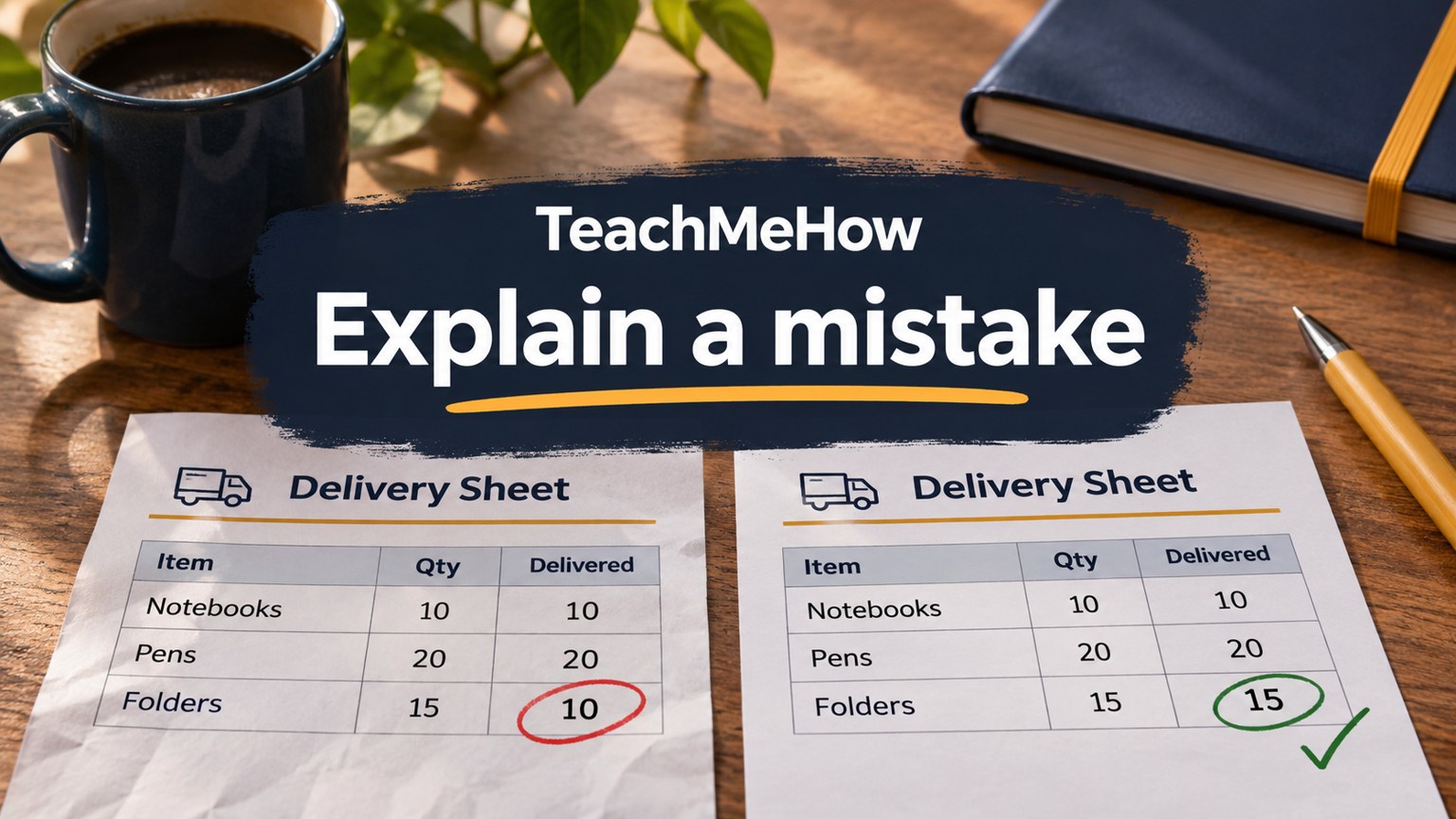
Walk through the error, its impact, the repair, and a lasting change. Practice with a worked example and realistic follow-up questions.
Follow these steps at your own pace. Check product terms and prices directly with providers before purchasing.
Quick answer
Describe one mistake you personally made, who it affected, what you did as soon as you knew, and the change that reduced the chance of a repeat. Make the sequence clear enough that the interviewer can distinguish the immediate fix from the longer-term lesson.
Choose an example with a beginning and an ending
Look for a decision, assumption, or skipped check you can name. Perhaps you sent an obsolete file, booked the wrong time, or counted an order twice. A vague story about “communication issues on the team” makes it hard to tell what you would personally do differently. Choose an incident that lets you explain your part without guessing why someone else acted.
Before drafting, write down four times or milestones: when the mistake happened, when you found it, when the affected person learned about it, and when the repair was complete. You do not need to quote a clock time for each. The exercise often reveals the interesting point. Perhaps the original typo mattered less than the hour you spent trying to solve it before you told the person waiting.
A worked answer about the wrong delivery sheet
Imagine a dispatcher copied yesterday’s delivery sheet to prepare the morning run. She updated the addresses but missed one revised pickup window. The driver called because the receiving desk had not yet opened. The route could still be recovered, but only if someone confirmed a new sequence.
“I reused a route sheet and carried over an old pickup time. When the driver called, I compared the sheet with the customer’s confirmation and saw my error. I told the route lead which stop was affected and called the receiving desk to confirm when it could accept the delivery. The lead approved moving another stop ahead of it. I sent the driver the corrected order and called back after the pickup. The delivery was completed that morning, but the driver lost time on the first stop. I changed my morning check to compare every revised time against the current confirmations before releasing the route.”
Notice the boundary between the dispatcher’s work and the lead’s decision. The dispatcher owns the bad time, verifies the facts, and proposes a repair. She credits the person who approved the route change. She also acknowledges the lost time even though the delivery eventually arrived. Those details make the example easier to trust.
Show how you know the change helped
A new checklist only helps if someone uses it at the point where the error can still be caught. Describe where it lives, who uses it, and what happens when a detail is missing. In the dispatch example, the check belongs before the route is released. Adding it to a weekly review would identify a pattern but would do little for today’s driver.
If you tested the change on the next few runs, say exactly that. If you later caught another stale time before dispatch, that observation makes a stronger closing sentence than a promise that the problem will never recur. If you are early in your career, a class project or volunteer shift works as long as the task and consequence are clear.
Answer the harder follow-up
“What would you do sooner?” deserves a fresh answer. You might now tell the route lead immediately while confirming the new pickup window. “What if you could not fix it?” calls for an owner, an honest update, and the next check-in. If the event exposed an ongoing habit, also prepare to explain the weakness you are working on.
Practice with someone who can interrupt and ask who knew what at each stage. Use the behavioral interview answer framework to shorten the setup if the listener has forgotten the original mistake by the time you reach the repair.
Comments
Comments are reviewed before they become public.
Sign in with Google to leave a comment.
Sign in with GoogleNo approved comments yet. Be the first to start the discussion.