How to Present Logo Concepts So a Client Can Choose a Direction
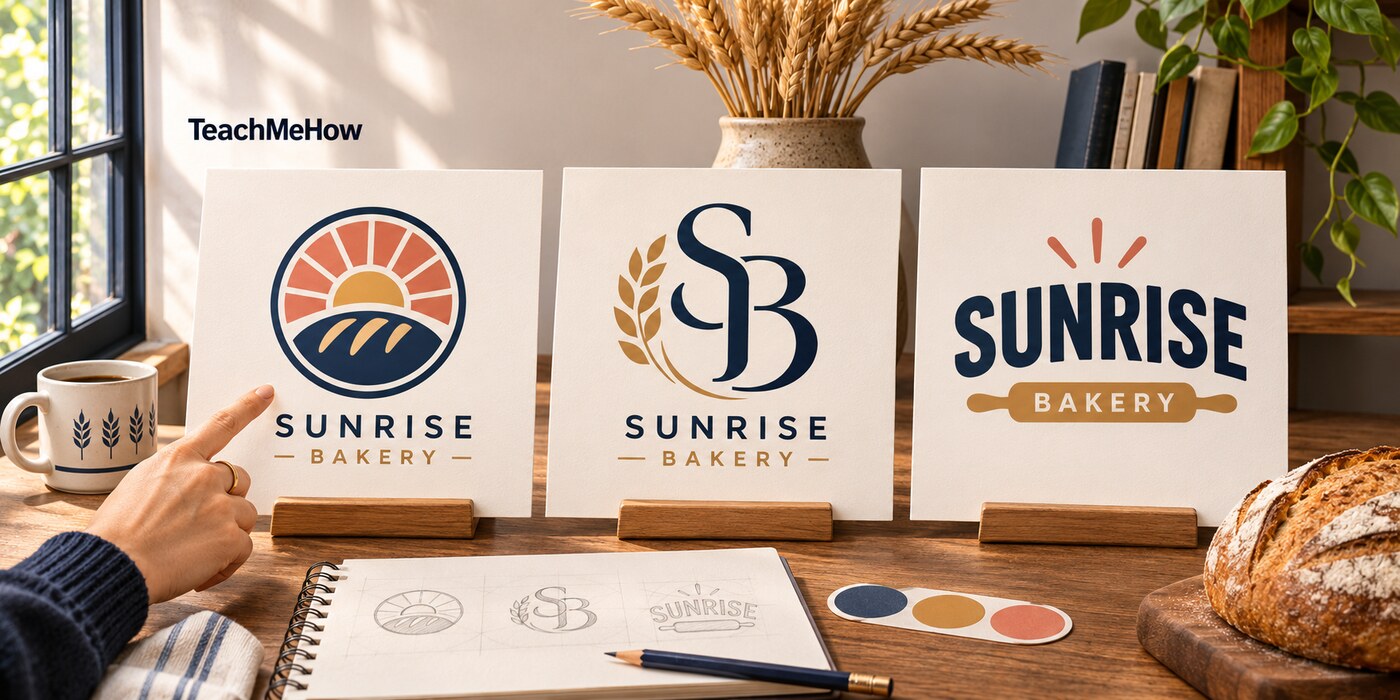
Build a short concept presentation that puts each logo through the same real-world tests. Includes a sample explanation and a decision prompt to close the meeting.
Follow these steps at your own pace. Check product terms and prices directly with providers before purchasing.
Quick answer
Open with the client’s most important use case. Show every concept at the same size, on the same background, and in the same application. Ask the decision maker to choose one direction to develop and identify the change it needs most.
Build a deck that supports a fair comparison
Pull the two or three success criteria from the approved logo design brief. For a bakery that relies on a bag stamp, those might be readable lettering, an identifiable shape, and a strong one-color impression. Put those criteria on the opening page so reviewers know what to look for.
- Give each concept a short name and its own page. Start with the plain mark on a neutral background. Large photos and embossing can make an ordinary design look more convincing than it will on a receipt.
- Show the same application for each concept. If one gets a kraft bag and a mobile header, give the other the same bag and header. For a physical stamp, print a plain proof at the intended size and confirm printer scaling.
- Explain one design decision and one trade-off per direction. Give the client a moment to look before talking through every detail.
- Finish with the options side by side, using the same scale. Ask which one best serves the priority use, where it falls short, and who will send the final decision.
A sample way to talk through two options
“The round loaf symbol fills the bag stamp well. At this size, though, the full bakery name has less room. The wordmark leaves more room for the name, but it loses the loaf silhouette when used on its own. Which matters more for the market launch?” That question invites a choice the owner can explain to the rest of the team.
If the client likes parts of both
Ask what each part accomplishes. “I like the lettering in B” might mean they can read B more easily. Capture that requirement as “test larger lettering in A” before promising a hybrid logo. Send a short decision record naming the chosen concept, changes to explore, approver, and feedback date. If reviewers disagree, collect one confirmed list of logo revisions before redrawing.
Comments
Comments are reviewed before they become public.
Sign in with Google to leave a comment.
Sign in with GoogleNo approved comments yet. Be the first to start the discussion.