How to Test and Clean Smoke Alarms
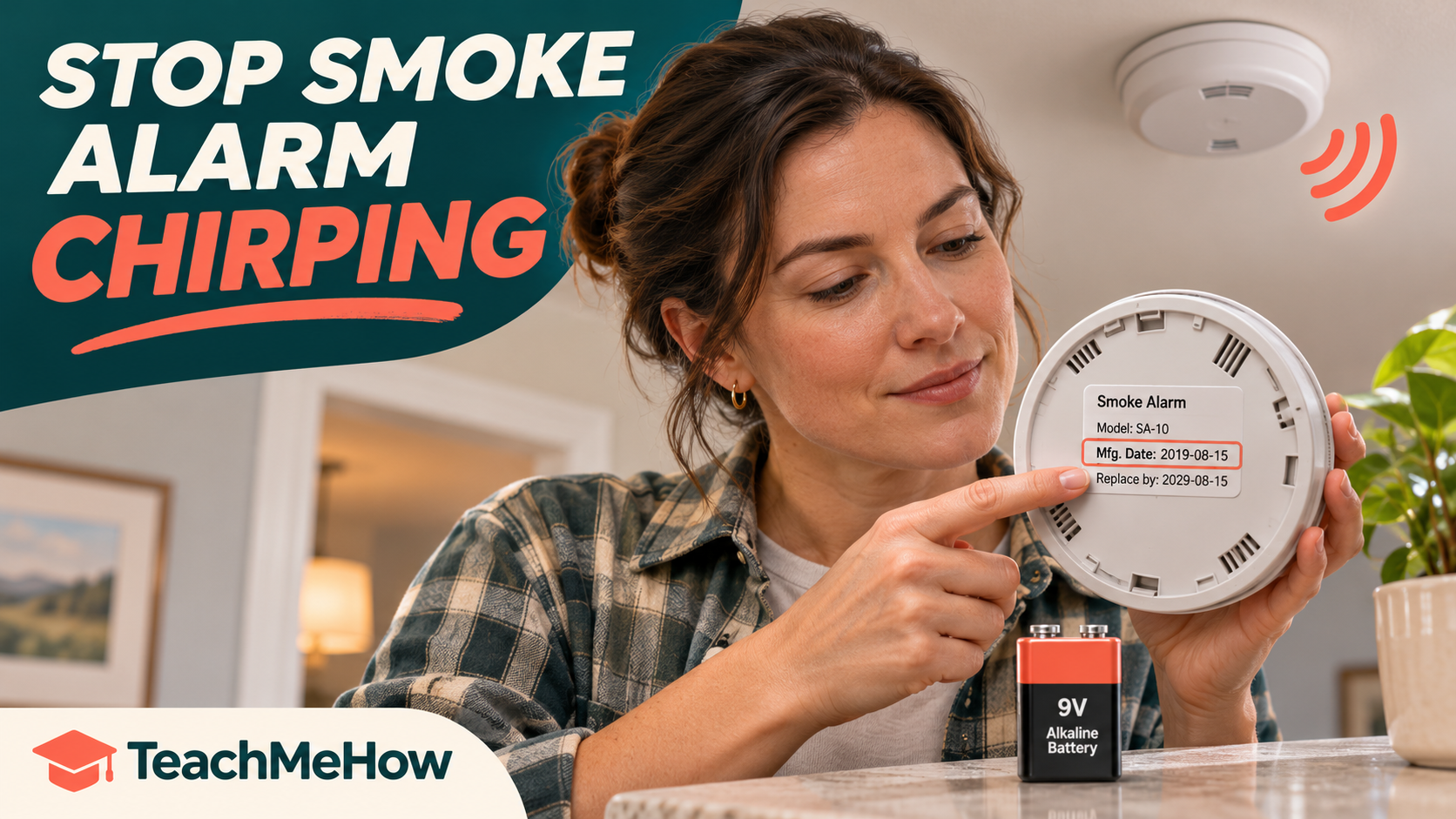
Test smoke alarms monthly and remove dust using the method in the manual. Check interconnected alarms and record each unit’s age.
Follow these steps at your own pace. Check product terms and prices directly with providers before purchasing.
Quick answer
Test every smoke alarm at least once a month by pressing its test button. Clean dust only with the method allowed by the manufacturer, and confirm linked alarms respond as their manual describes. Record test dates and replace a unit that fails, reaches its service life, or gives an end-of-life alert.
What you need
- The model manual for each alarm.
- A stable step stool or ladder for ceiling units.
- A soft vacuum brush if the manual permits it.
- A checklist or recurring reminder.
Monthly test steps
- Tell the household. Let everyone know you are testing alarms so no one mistakes the test for a fire. Warn nearby neighbors if the alarms are loud or connected.
- Use the test button. Press and hold it for the time stated in the manual. Do not use a candle, lighter, or open flame to test smoke response.
- Confirm the signal. Verify the alarm sounds. If it does not, check the power and battery as directed, then test again.
- Check interconnection. Follow the system’s test procedure and verify linked units respond if the manufacturer says they should.
- Write down the result. Record the date and any unit that did not sound, chirped, or needed attention.
Clean without damaging the sensor
- Read the cleaning instructions for the exact model; methods differ.
- If allowed, gently vacuum dust from the outside and vent openings using a soft brush attachment.
- Wipe the housing only if the manual permits it. Keep water, spray cleaners, paint, and insect spray out of the sensor.
- Do not open the case or use compressed air unless the manufacturer specifically instructs it.
- Restore the unit to its base and test it again after cleaning.
Replacement and battery schedule
Read the manufacture date printed on the unit, not only the date you installed it. Many smoke alarms need full replacement 10 years after manufacture; follow the exact model’s service life if it differs. Replace a removable battery at least yearly or when the alarm signals low battery, and replace backup batteries in hardwired models as directed. A sealed 10-year battery is not user-replaceable; replace the whole alarm at end of life.
Common mistakes
- Testing only one alarm instead of every unit.
- Using real smoke or flame as a test method.
- Spraying cleaner into the openings or taking the housing apart.
- Ignoring a failed test or removing a battery to silence a chirp.
For a periodic chirp, see how to troubleshoot a chirping alarm. If a battery is due, follow the battery replacement steps.
Related smoke alarm guides
- Install smoke alarms in your home
- Replace a smoke alarm battery
- Fix a smoke alarm that keeps chirping
- Choose a smoke alarm
Sources: NFPA smoke alarm guidance and U.S. Fire Administration. Follow the manual.
Bottom line
A monthly test, careful model-approved cleaning, and an accurate replacement-date check are the basics. If a unit fails a test, troubleshoot the power as directed and replace the alarm if it still does not work.
Comments
Comments are reviewed before they become public.
Sign in with Google to leave a comment.
Sign in with GoogleNo approved comments yet. Be the first to start the discussion.