How to Choose the Right Outdoor Christmas Extension Cord
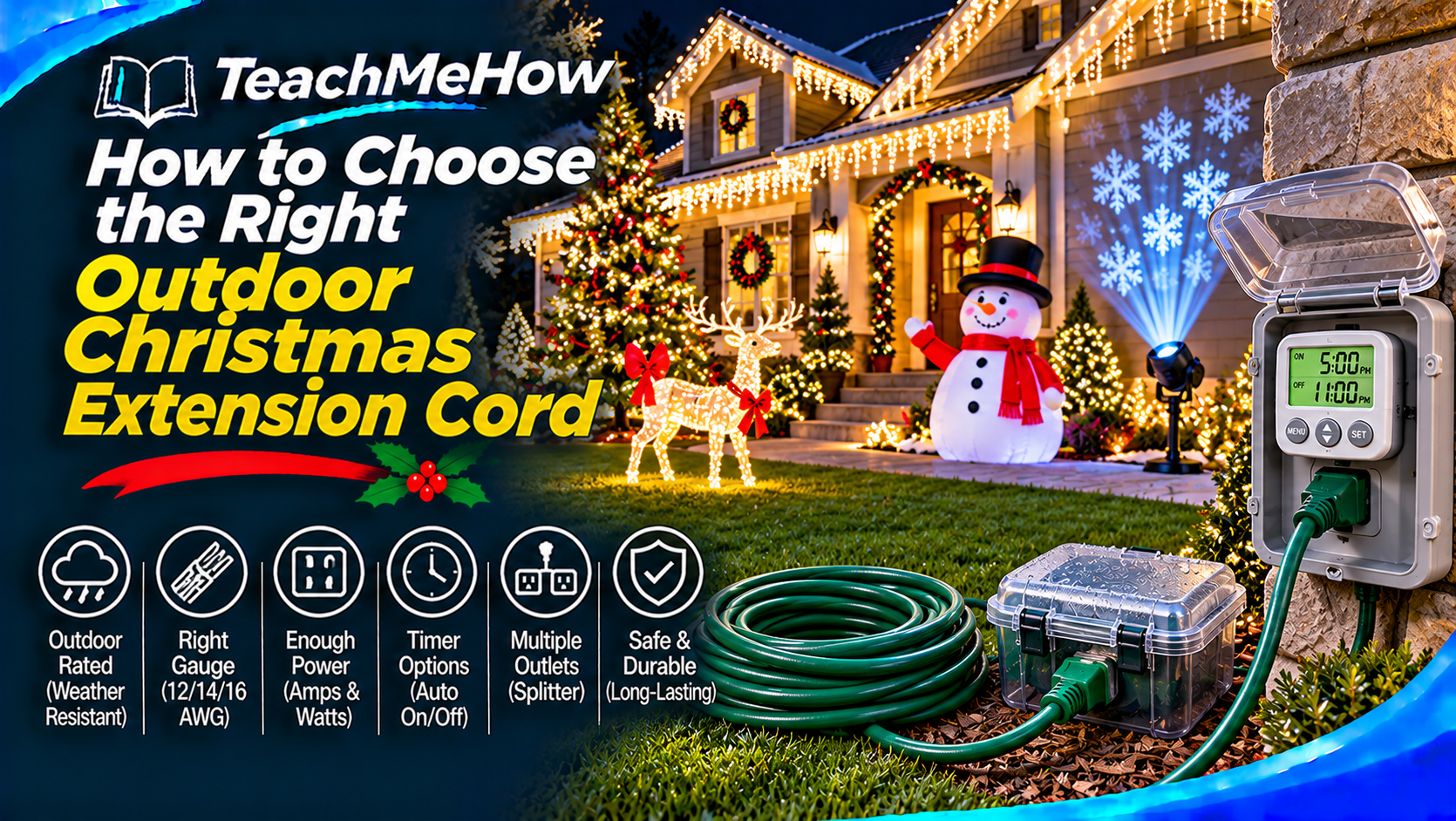
Learn how to choose the right outdoor Christmas extension cord based on cord gauge, length, weather resistance, outlet capacity, grounded plugs, timers, splitters, and safe holiday-lighting use.
Follow these steps at your own pace. Check product terms and prices directly with providers before purchasing.
How to Choose the Right Outdoor Christmas Extension Cord
Outdoor Christmas decorations often end up farther from an outlet than expected. The right extension cord helps power lights, inflatables, projectors, and other decorations safely without creating unnecessary clutter or overloading the electrical setup.
For outdoor Christmas decorating, use a cord specifically rated for exterior use, choose a wire gauge appropriate for the total electrical load, keep the run as short as practical, and protect all connections from standing water. Do not use lightweight indoor cords outside just because the decorations themselves are small.
✨ What Matters Most?
| Feature | Why it matters |
|---|---|
| 🌧️ Outdoor rating | The cord needs insulation designed for exterior conditions. |
| 📏 Length | Longer cords are convenient but can add clutter and electrical resistance. |
| ⚡ Wire gauge | Determines how much current the cord can safely carry. |
| 🔌 Outlet configuration | Controls how many decorations can be connected at one location. |
| 💧 Connector protection | Helps keep electrical connections away from moisture. |
| ⏱️ Timer compatibility | Makes nightly holiday lighting much easier to manage. |
1. 🎄 Start With the Distance
Measure the actual route from the outlet to the decoration rather than estimating in a straight line.
The cord may need to travel along walls, around landscaping, across a porch, or behind shrubs before reaching the lights.
Buy enough length to reach comfortably, but avoid adding 50 extra feet of cord when you only need 10 or 15.
2. Outdoor-Rated Means Outdoor-Rated
Extension cords intended for exterior use are built with insulation designed to tolerate moisture, cold, sunlight, and temperature changes better than ordinary indoor cords.
Look for clear manufacturer labeling that indicates outdoor use.
Do not assume that a heavy-looking cord is automatically suitable for exterior use.
3. Understand Wire Gauge
Extension-cord wire size is commonly described using AWG, or American Wire Gauge.
With AWG numbers, a lower number generally means a thicker conductor. A thicker conductor can usually carry more current with less voltage drop than a thinner one.
| Typical gauge | General use |
|---|---|
| 16 AWG | Lighter loads and shorter runs |
| 14 AWG | Moderate loads and longer holiday setups |
| 12 AWG | Heavier loads and longer runs |
Always follow the cord manufacturer's actual amperage and wattage rating rather than choosing by gauge alone.
4. Longer Cords Need More Attention
The farther electricity travels through an extension cord, the more important conductor size becomes.
A long cord carrying a substantial load may experience greater voltage drop than a short cord carrying the same equipment.
For long outdoor runs or multiple decorations, choose a heavier-duty cord rather than relying on the thinnest cord that physically reaches.
5. Check the Cord's Actual Rating
The packaging or cord jacket should indicate electrical limits such as maximum amperage or wattage.
Add up the power demands of the decorations connected to that cord and stay within the manufacturer's limit.
Do not assume that LED Christmas lights make overloads impossible. Other decorations such as inflatables and projectors may use more power.
6. LED Christmas Lights Use Less Power
LED holiday lights generally use far less electricity than traditional incandescent strings.
This can make large displays easier to manage electrically and may allow more light strands within the manufacturer's limits.
You still need to follow the ratings for the extension cord, outlet, timer, splitter, and decorations.
7. Inflatables Add Continuous Loads
Outdoor Christmas inflatables use blowers that run continuously while the decoration is inflated.
Several inflatables connected together can create a larger load than strings of LED lights alone.
Check each inflatable's electrical label before connecting several units to one extension cord.
8. 🎅 Christmas Projectors Need Power Too
Holiday projectors may use relatively little power, but their placement can require especially long cord runs into the yard.
This makes outdoor rating, connection protection, and cord visibility particularly important.
9. Grounded Three-Prong Cords
If your decoration or equipment uses a grounded three-prong plug, the extension cord should maintain that grounding connection.
Never remove or defeat the grounding prong to make a plug fit an unsuitable cord.
10. Do Not Daisy-Chain Extension Cords Unnecessarily
Connecting one extension cord into another can create extra connection points and make the installation harder to manage.
If possible, use one properly rated cord long enough for the intended run.
If multiple cords are necessary, follow the equipment and cord manufacturers' instructions.
11. Outdoor Splitters Can Reduce Cord Clutter
An outdoor-rated multi-outlet splitter can allow several nearby decorations to share one properly planned supply point.
This can be useful for a cluster of inflatables or several sets of lights in one section of the yard.
| Setup | Useful approach |
|---|---|
| One decoration | Single outdoor extension cord |
| Several nearby decorations | Outdoor-rated splitter if load permits |
| Large yard display | Multiple planned power zones |
| Roofline lights | Minimize visible cord runs |
12. Never Exceed the Splitter's Rating
A splitter does not create additional electrical capacity.
All equipment connected through it still contributes to the total load on the cord and circuit.
Always stay within the lowest applicable rating in the chain.
13. 💧 Keep Connections Out of Standing Water
Outdoor-rated equipment is designed for exterior use, but plugs and connectors should still be positioned carefully.
Do not leave connections sitting in puddles, melting snow, gutters, or areas where sprinklers regularly spray.
Position connections above ground whenever practical and follow the manufacturer's instructions for weather exposure.
14. Connection Covers
Weather-resistant connection covers can help shield joined plugs from direct exposure.
They are especially useful where an extension cord connects to a decoration in the yard.
Choose a cover sized for the actual plugs rather than forcing bulky connectors into a small enclosure.
15. Outdoor GFCI Protection
Outdoor holiday decorations should be powered from properly protected outdoor electrical outlets.
Ground-fault circuit interrupter protection is an important safeguard around moisture.
If you are unsure whether an exterior outlet is suitable for holiday decorations, have the electrical setup evaluated by a qualified electrician.
16. ⏱️ Use a Timer
A timer can turn outdoor Christmas decorations on automatically at sunset or a chosen time and shut them off later at night.
This is easier than manually connecting and disconnecting the display every day.
Some outdoor timers provide several outlets, while smart outdoor plugs can offer app-based scheduling.
17. Smart Outdoor Plugs
A smart outdoor plug can add schedules, remote control, and sometimes voice-assistant integration.
This is useful if several decorations need to operate together every night.
Make sure the smart plug itself is rated for outdoor use and can handle the connected electrical load.
18. Cold-Weather Flexibility
Some extension cords become noticeably stiff in low temperatures.
A more flexible cold-weather jacket can make installation easier and reduce the tendency for loops of cable to lift off the ground.
This may matter more in colder climates than in mild winter areas.
19. Bright Cord Colors Can Be Useful
Green cords blend into grass and landscaping, while white cords may disappear better against siding or snow.
Bright orange cords are easy to see but can be visually distracting in a holiday display.
Choose visibility or camouflage based on where the cord will run.
20. Avoid Trip Hazards
Do not run extension cords loosely across sidewalks, driveways, doorways, or other walking paths.
If a cord must cross an area people use, route and protect it appropriately so it does not become a tripping hazard.
21. Do Not Run Cords Through Closed Doors or Windows
Pinching an extension cord in a door or window can damage the insulation.
Use suitable outdoor outlets rather than routing cords through openings that crush or abrade them.
22. Keep Cords Away From Sharp Edges
Roof edges, metal gutters, fence hardware, and landscaping can damage cord insulation if the cable moves repeatedly in the wind.
Route the cord where it will not rub against sharp surfaces.
23. Inspect Cords Before Every Holiday Season
Outdoor cords can become damaged during installation, storage, or previous use.
Before using one again, check for:
- Cracked insulation
- Cuts or exposed wire
- Bent plug blades
- Missing grounding prongs
- Burn marks
- Loose connectors
Replace damaged cords rather than trying to make questionable repairs for temporary holiday use.
24. A Warm Plug or Cord Can Be a Warning Sign
Connections may become slightly warm under normal use, but excessive heat, discoloration, melting, or burning odor should be taken seriously.
Disconnect the setup and investigate the cause rather than continuing to operate it.
Holiday decorations are temporary, but electrical safety rules are not. A display is never worth operating damaged or overloaded equipment.
25. Plan Large Displays in Zones
If your yard contains roof lights, shrubs, inflatables, projectors, pathway lights, and other decorations, divide the display into logical power areas.
This makes cords easier to route and reduces the temptation to connect everything through one long chain.
26. Label Extension Cords
For a large display, label cords by location:
- Roof
- Front shrubs
- Inflatables
- Projector
- Porch
- Pathway lights
This makes troubleshooting and next year's installation much easier.
27. 📦 Store Cords Properly After Christmas
Do not throw extension cords into a box in a tangled pile.
Coil them loosely and avoid sharp bends that can stress the conductors.
Store plugs and timers dry and protected from damage.
Label each cord with its length and gauge before storage. Next Christmas, you can choose the right cord immediately without uncoiling every one you own.
🎄 Which Outdoor Christmas Extension Cord Is Best for You?
| Your holiday setup | Prioritize |
|---|---|
| Small LED-light display | Outdoor rating and appropriate light-duty capacity |
| Several inflatables | Heavier gauge and adequate amperage |
| Long yard run | Heavier gauge and durable weather-resistant jacket |
| Multiple nearby decorations | Outdoor splitter within load limits |
| Automatic nightly display | Outdoor timer or smart plug |
| Large whole-house display | Multiple planned power zones |
🎅 5 Common Holiday Extension Cord Mistakes
- Using indoor cords outside. Exterior use requires an outdoor-rated cord.
- Choosing by length alone. Gauge and electrical rating matter too.
- Overloading a splitter. Extra outlets do not create extra circuit capacity.
- Leaving connections in puddles. Keep plugs positioned away from standing water.
- Reusing damaged cords. Cracked insulation and damaged plugs should not be ignored.
🎁 Before You Buy: Holiday Extension Cord Checklist
- How far is the outlet from the decoration?
- Is the cord rated for outdoor use?
- What wire gauge is it?
- What is the maximum amperage?
- What is the maximum wattage?
- How much power will your decorations use?
- Do you need a grounded three-prong cord?
- Do you need multiple outlets?
- Will the connectors stay away from water?
- Is the outdoor outlet GFCI protected?
- Would a timer or smart plug help?
- Will the cord cross a walkway?
- Is the insulation flexible enough for winter weather?
- Is the cord free from cuts and damage?
- How will you label and store it after Christmas?
The right outdoor extension cord is not the most exciting part of a Christmas display, but it is one of the most important. Choose an outdoor-rated cord with enough electrical capacity for the decorations, keep the run as short and organized as practical, protect connections from moisture, and inspect everything before each holiday season. A well-planned power setup makes the rest of your Christmas decorations easier to enjoy.
Comments
Comments are reviewed before they become public.
Sign in with Google to leave a comment.
Sign in with GoogleNo approved comments yet. Be the first to start the discussion.