How to Choose the Right Christmas Lights
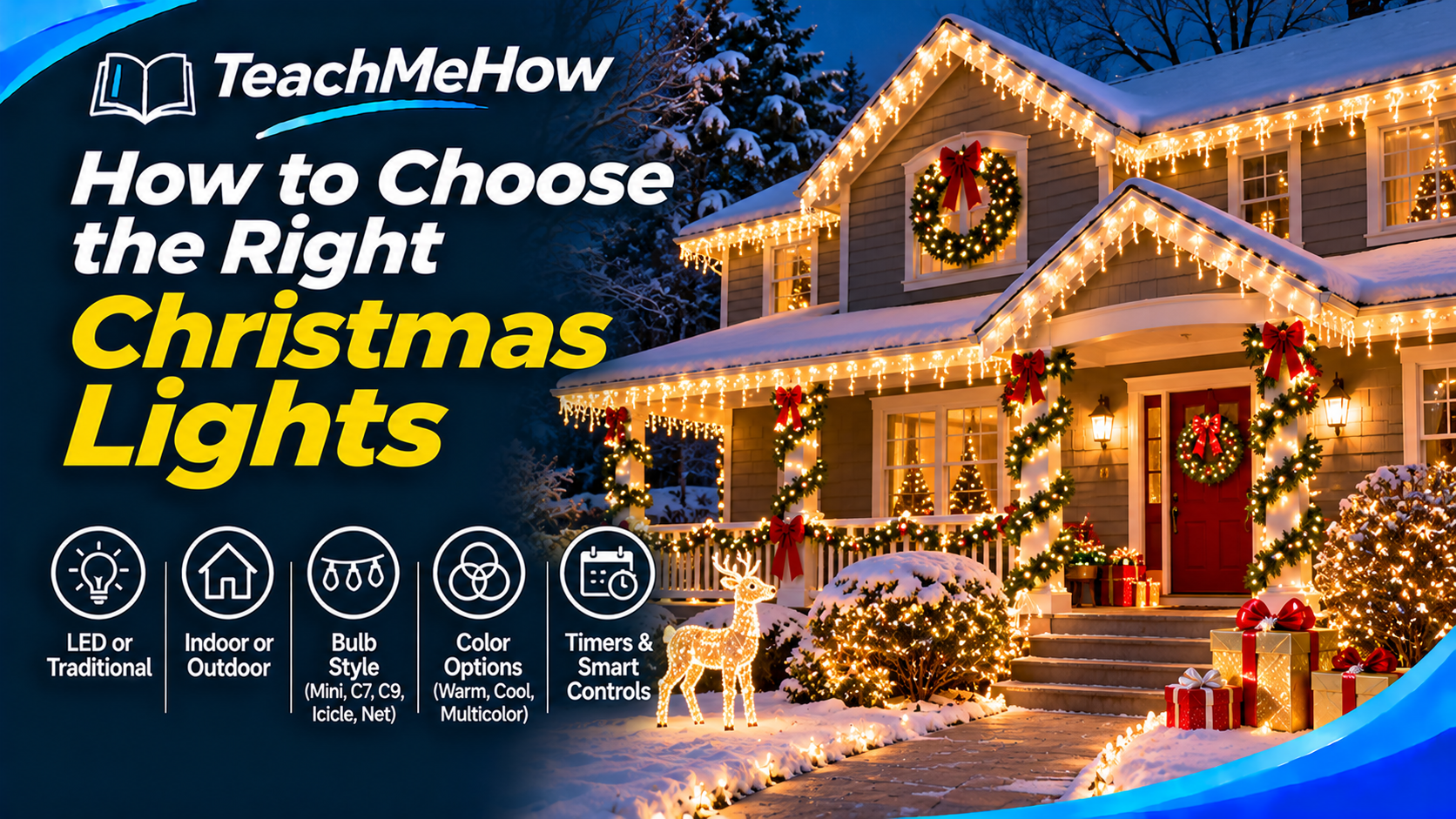
Learn how to choose the right Christmas lights based on indoor or outdoor use, LED type, color temperature, bulb style, strand length, weather resistance, smart controls, energy use, and safety.
Follow these steps at your own pace. Check product terms and prices directly with providers before purchasing.
How to Choose the Right Christmas Lights
Christmas lights can completely change the look of a home during the holidays, but choosing the right set involves more than picking a color you like. Indoor and outdoor ratings, bulb size, LED type, wire color, strand length, weather resistance, smart controls, and electrical limits all matter once you start decorating a tree, roofline, porch, railing, or yard.
The easiest way to avoid frustration is to plan the display before buying. Measure the area, decide on a lighting style, and choose products that can safely handle the location where they will be used.
Quick answer: For most holiday decorating, LED Christmas lights are the best all-around choice because they use less electricity, stay cooler, and generally allow more strands to be connected together. Choose outdoor-rated lights for exterior use and measure your decorating area before deciding how many strands you need.
What Matters Most?
| Feature | Why it matters |
|---|---|
| Indoor/outdoor rating | Determines whether the lights are designed to handle moisture and outdoor conditions. |
| LED vs. incandescent | Affects energy use, heat, lifespan, and how many strands can connect together. |
| Bulb style | Changes the overall look of the display. |
| Color temperature | Determines whether white lights look warm and traditional or cooler and brighter. |
| Strand length | Controls how many sets you need and how many connections will be visible. |
| Controls | Timers, dimmers, and smart features can make daily operation much easier. |
1. Start With Where the Lights Will Go
Before choosing a bulb style or color, decide where the lights will actually be installed.
Indoor use
For Christmas trees, mantels, windows, stair railings, and indoor garlands, compact mini lights are usually the easiest to work with.
Outdoor use
Rooflines, gutters, trees, fences, and exterior decorations require lights that are specifically rated for outdoor use.
Outdoor-rated lights are designed to better tolerate moisture, temperature changes, and exposure to the elements.
Safety tip: Do not assume that every Christmas light set is suitable for outdoor use. Check the packaging or manufacturer specifications before installation.
2. Measure Before You Buy
One of the most common holiday-lighting mistakes is guessing how much length is needed.
Measure rooflines, railings, windows, fences, shrubs, or tree height before purchasing. Then add some extra length for routing the cord and reaching the electrical outlet.
For Christmas trees
The number of lights you need depends on tree height and how heavily illuminated you want the tree to appear.
A lightly decorated tree requires fewer lights, while a bright, dense appearance requires considerably more.
3. LED or Incandescent?
LED Christmas lights have become the standard choice for many homes.
LED lights
- Use significantly less electricity
- Produce less heat
- Generally last longer
- Allow more strands to be connected together
- Are available in many colors and effects
Incandescent lights
Traditional incandescent Christmas lights have a familiar warm glow that some people prefer. They are often inexpensive, but they use more electricity and produce more heat.
If you decorate heavily or run lights for many hours each night, LED sets can reduce energy consumption substantially.
4. Warm White vs. Cool White
Not all white Christmas lights look the same.
| White-light style | Appearance |
|---|---|
| Warm white | Soft, yellowish glow similar to traditional incandescent bulbs |
| Pure white | Neutral, clean appearance |
| Cool white | Brighter white with a slightly blue tone |
Warm white tends to work well with traditional red, gold, wood, and greenery decorations. Cool white can create a more modern or icy winter appearance.
Buying tip: If you are adding lights to an existing display, try to match the color temperature. Two different versions of “white” can look noticeably different when placed next to each other.
5. Multicolor Christmas Lights
Multicolor strands create a playful, traditional holiday appearance and work especially well on family Christmas trees, outdoor shrubs, and colorful yard displays.
Some modern LED sets allow you to switch between white and multicolor modes instead of choosing one permanently.
This can be useful if you like changing your decorating style from year to year.
6. Mini Lights
Mini lights are one of the most versatile options. Their small bulbs work well on Christmas trees, garlands, wreaths, railings, and shrubs.
Because each bulb is small, you can use many lights without making the display look overly bulky.
7. C7 and C9 Lights
C7 and C9 bulbs are larger and create a more traditional roofline appearance.
C9 bulbs are especially common for exterior rooflines because their larger size remains visible from farther away.
| Bulb type | Best use |
|---|---|
| Mini lights | Trees, garlands, railings, shrubs |
| C7 | Windows, small rooflines, indoor displays |
| C9 | Rooflines, fences, large outdoor displays |
8. Icicle Lights
Icicle lights hang vertically from a main horizontal wire and are designed to create the appearance of glowing icicles.
They are especially popular along roof edges, porches, and balconies.
Check the drop length before buying because some sets hang much farther down than others.
9. Net Lights
Net lights arrange bulbs in a rectangular mesh. They are designed to be draped over shrubs and hedges rather than wrapped around individual branches.
They can dramatically reduce decorating time and create a uniform appearance.
Measure the shrub before buying so you can choose the appropriate net dimensions.
10. Curtain Lights
Curtain lights use multiple vertical strands hanging from one horizontal wire.
They can work well on windows, walls, patios, backdrops, and party areas.
Some versions include twinkle effects, remote controls, or several lighting patterns.
11. Check Strand Spacing
Two light sets of the same overall length may contain different numbers of bulbs.
Closer bulb spacing creates a denser, brighter appearance. Wider spacing can work well when covering large areas with fewer lights.
Look at both strand length and bulb count when comparing sets.
12. Wire Color Matters
Christmas-light wire usually comes in green, white, brown, or black.
Green wire blends into Christmas trees and greenery. White wire can disappear more easily against white walls, gutters, and snowy decorations.
Dark wire may work better on dark roofs or fences.
This small detail can make the finished installation look considerably cleaner.
13. How Many Strands Can You Connect?
Manufacturers specify a maximum number of light strands that can safely be connected end to end.
LED lights generally allow more connected strands because they consume less power.
Never exceed the manufacturer's connection limit, even if the plugs physically fit together.
14. Look for End-to-End Connections
If you are decorating a long roofline or railing, end-to-end connectors allow one strand to plug directly into the next.
This reduces the number of extension cords needed and creates a cleaner installation.
Some specialty decorative lights do not support end-to-end connections, so check before purchasing multiple sets.
15. Timers Are Worth Having
A timer allows the lights to turn on automatically each evening and shut off later at night.
This saves electricity and eliminates the need to manually plug and unplug the display every day.
Outdoor smart plugs can also provide scheduling and remote control if you want more flexibility.
16. Smart Christmas Lights
Smart lights can offer app control, custom colors, animated patterns, music synchronization, scheduling, and individual lighting effects.
They can create impressive displays, but they usually cost more than conventional LED strands.
Before buying, check whether the system requires Wi-Fi, Bluetooth, a hub, or a specific mobile app.
17. Do You Need Animated Effects?
Some light sets provide flashing, fading, chasing, twinkling, or color-changing patterns.
These effects can look great outdoors or on a modern Christmas tree, but not everyone wants movement.
Look for a steady-on mode if you want the option to use traditional lighting as well.
18. Weather Resistance
Outdoor Christmas lights may encounter rain, snow, wind, and freezing temperatures.
Look for appropriate outdoor ratings and use weather-resistant outdoor extension cords and connections.
Electrical plugs should not sit in puddles or areas where water can accumulate.
19. Extension Cords Matter Too
Use extension cords rated for the environment where they will operate.
For exterior displays, use outdoor-rated extension cords and keep connections protected from direct water exposure whenever possible.
A long outdoor lighting run may require planning several power locations rather than connecting everything to one cord.
20. Outdoor GFCI Protection
Exterior holiday lights should be connected to properly protected outdoor electrical outlets.
Ground-fault circuit interrupter protection is an important safety feature for electrical equipment used around moisture.
If you are unsure about an outdoor outlet or electrical installation, consult a qualified electrician.
21. Replace Damaged Light Sets
Inspect older Christmas-light sets before installation.
Cracked insulation, exposed wiring, damaged plugs, loose sockets, or signs of overheating are reasons to stop using a strand.
The cost of replacing a damaged set is small compared with the risk of continuing to use unsafe electrical decorations.
22. Plan for Storage Before January
Christmas lights become much easier to reuse when they are stored properly.
Instead of stuffing strands into a box, wrap them around a dedicated light reel, storage spool, or piece of sturdy cardboard.
Label each set by location—such as “front roof,” “tree,” or “porch”—so decorating is faster the following year.
Which Christmas Lights Are Best for You?
| Where you're decorating | Good choice |
|---|---|
| Christmas tree | Warm-white or multicolor LED mini lights |
| Roofline | C7 or C9 outdoor LEDs |
| Shrubs | Net lights or mini LEDs |
| Windows | Mini, curtain, or icicle lights |
| Modern display | Smart color-changing LEDs |
| Traditional display | Warm-white LEDs or classic bulb styles |
5 Common Christmas Light Buying Mistakes
- Buying indoor lights for outdoor use. Always check the location rating.
- Guessing the length. Measure first so you do not run out halfway across the roofline.
- Mixing different shades of white. Warm and cool whites can clash when placed together.
- Connecting too many strands. Follow the manufacturer's maximum connection limit.
- Ignoring wire color. Matching the wire to the background makes the finished display look much cleaner.
Before You Buy: Holiday Lighting Checklist
- Indoor or outdoor use?
- How many feet of lights do you need?
- Warm white, cool white, or multicolor?
- Mini, C7, C9, icicle, net, or curtain style?
- LED or traditional incandescent?
- How many bulbs are on each strand?
- What color is the wire?
- Can the strands connect end to end?
- How many strands can safely connect?
- Do you want a timer?
- Do you want smart controls?
- Are outdoor sets properly weather rated?
- Do you have outdoor-rated extension cords?
- Are the plugs and wires in good condition?
- How will you store the lights after Christmas?
Bottom line: The right Christmas lights should match the location, decorating style, and size of your display while remaining simple and safe to operate throughout the holiday season. For most homes, outdoor-rated LED lights with the correct bulb style, color temperature, and strand length provide the best combination of appearance, energy efficiency, durability, and convenience.
Comments
Comments are reviewed before they become public.
Sign in with Google to leave a comment.
Sign in with GoogleNo approved comments yet. Be the first to start the discussion.