How to Choose the Right Blender
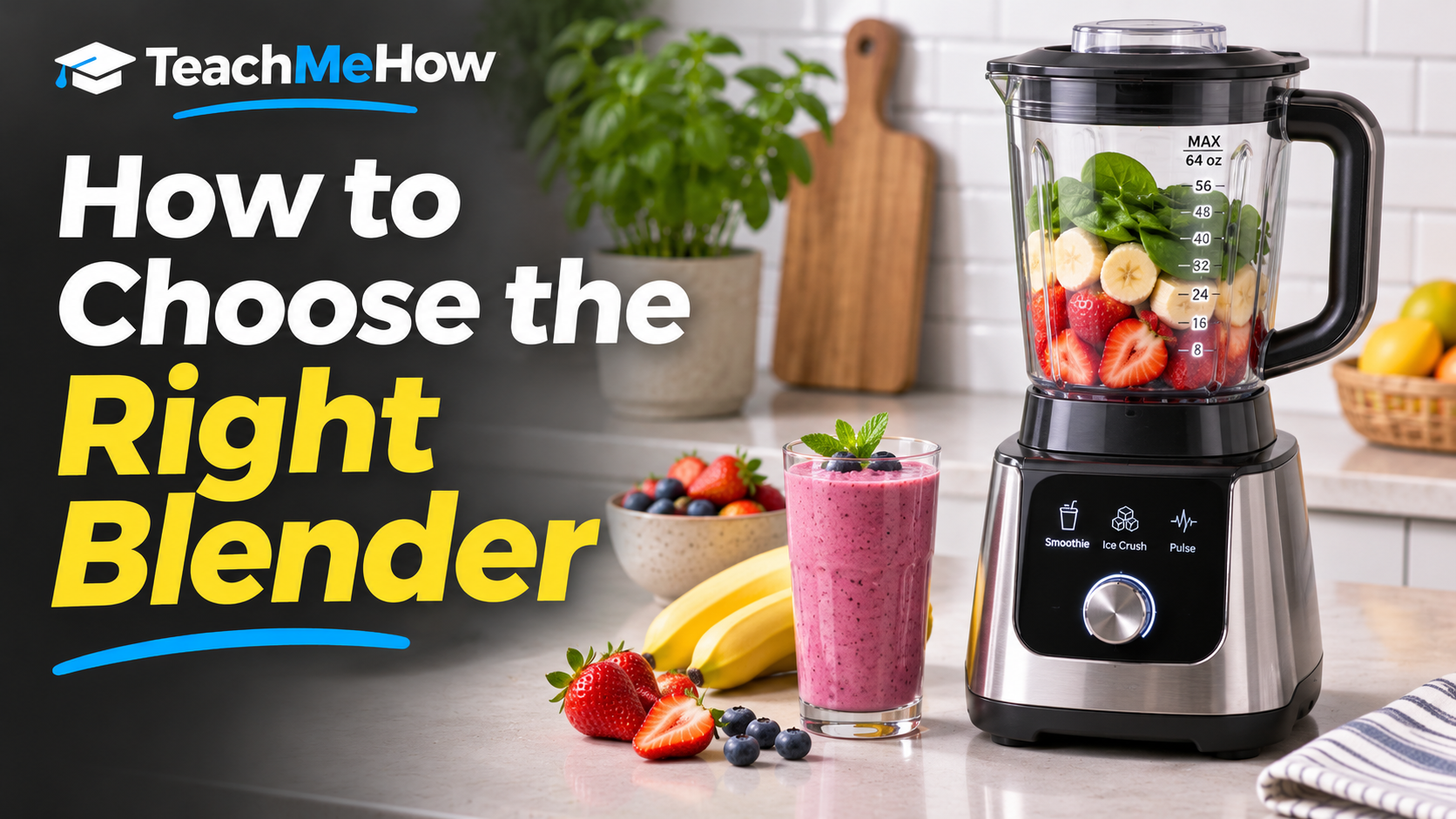
Learn how to choose the right blender based on motor performance, jar size, blade design, controls, noise, cleaning, and the foods and drinks you make most often.
Follow these steps at your own pace. Check product terms and prices directly with providers before purchasing.
How to Choose the Right Blender
A blender can handle smoothies, sauces, soups, frozen drinks, nut butters, and many other kitchen tasks, but different models are designed for very different workloads. Motor power is important, yet blade design, jar shape, controls, noise, cleaning, and durability can matter just as much.
The best blender depends on what you make most often and how frequently you use it.
Start With Your Main Use
If you mainly make smoothies, look for strong frozen-fruit performance and an easy-to-clean jar. If you plan to make thick mixtures such as nut butter, hummus, or frozen desserts, you may need a more powerful machine with a tamper.
For occasional light use, a simpler blender may be completely adequate.
Motor Power
Higher wattage can help with ice, frozen fruit, and thick mixtures, but wattage alone does not guarantee better performance.
Blade design, jar geometry, and motor control all affect how efficiently ingredients move through the blades.
Jar Size
A large jar is useful for families and batch cooking, while a smaller container is more convenient for one or two servings.
Some blenders offer both full-size pitchers and personal cups that attach directly to the motor base.
Plastic Versus Glass Jars
High-quality plastic jars are lighter and less likely to shatter. Glass jars resist staining and scratching but are heavier and can break if dropped.
Consider whether you frequently move the jar or store it in a high cabinet.
Controls and Presets
Preset programs can simplify smoothies, soups, and cleaning cycles. Manual variable-speed control provides more flexibility when texture matters.
Choose the level of control you will actually use rather than paying for dozens of programs.
Noise
Powerful blenders can be loud. If you make smoothies early in the morning or live in an apartment, noise may be an important factor.
Some premium models use sound enclosures or better motor isolation.
Cleaning
A blender that is difficult to clean may not get used often. Look for removable components, dishwasher-safe parts, and simple self-cleaning instructions.
Common Blender-Buying Mistakes
One mistake is buying a very powerful blender for simple occasional smoothies. Another is choosing a small personal blender for thick or heavy recipes it was not designed to handle.
It is also easy to overlook jar size and storage height.
Which Blender Is Right for You?
For daily smoothies and frozen ingredients, a strong full-size blender with variable speed is a versatile choice. Light users may be perfectly happy with a simpler machine, while serious cooks may benefit from a premium high-performance model.
What to Compare Before Buying
- Main use
- Motor performance
- Jar size
- Jar material
- Blade design
- Preset programs
- Variable-speed control
- Noise
- Cleaning
- Warranty and price
Helpful tools to consider
Blenders — Compare blenders based on motor performance, jar size, jar material, blade design, preset programs, variable-speed control, noise, cleaning, durability, and price.
Product links will appear after our recommendations have been reviewed and affiliate partnerships are approved.
Disclosure: We may earn a commission from qualifying purchases made through affiliate links, at no additional cost to you. Learn more.
Comments
Comments are reviewed before they become public.
Sign in with Google to leave a comment.
Sign in with GoogleNo approved comments yet. Be the first to start the discussion.