Everyday Pick

Pizza wheels
OXO Good Grips 4-Inch Pizza Wheel (11301000)
The 4-inch steel wheel clears a puffy crust, while the soft handle and thumb guard give you a secure grip for long cuts across a board.
Check current price
View on Amazon ↗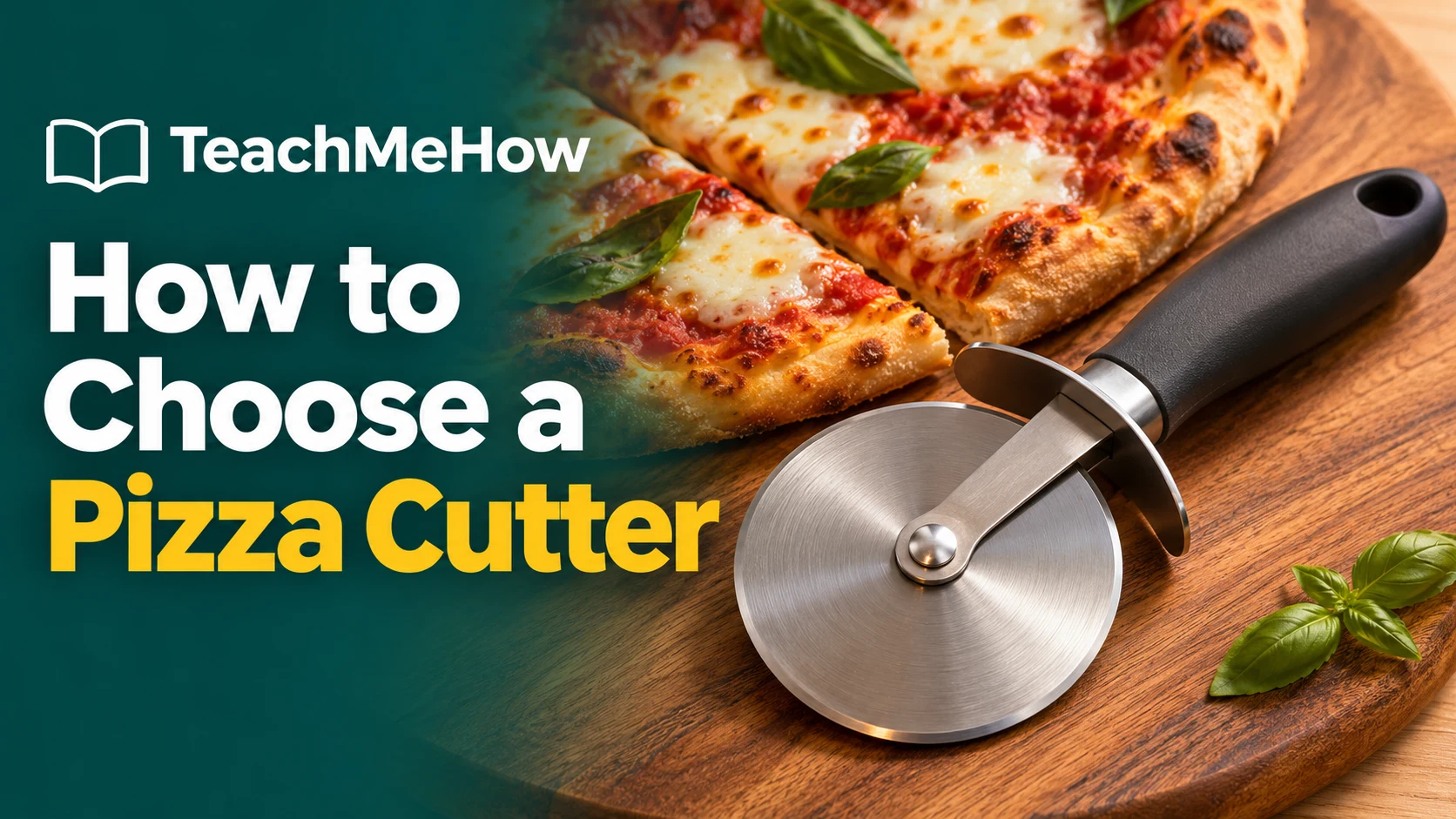
Choose a wheel, scissors, or rocker by the way you serve pizza. Compare blade clearance, pan protection, and the space each cutter needs on your board and in your drawer.
Follow these steps at your own pace. Check product terms and prices directly with providers before purchasing.
Quick Answer
If you slide your pizza onto a cutting board, a handled wheel is an easy everyday choice. Its rolling edge follows a straight line from one side of the crust to the other. If the pizza stays in a coated pan, look at pizza scissors with a protective base that slips beneath the crust. A long rocker makes sense when you routinely divide large pies on a wide, flat board.
| Style | Where it works well | What to check |
|---|---|---|
| Handled wheel | Round pizzas and flatbreads on a board | How much blade is exposed below the fork that holds it? |
| Pizza scissors | Cutting individual slices from the edge of a pan | Can the lower blade or protective shoe slide under your crust? |
| Rocker cutter | Portioning a large pie or cutting a rectangular pizza into squares | Will the cutting edge span the pizza and fit on your board? |
Picture the last pizza you served. If you lifted it onto a wooden board, a steel wheel can roll right off the far edge of the crust. If you served it straight from a nonstick pan, look at what touches the coating. A thumb guard protects your hand, while a shoe under the lower blade protects the pan. Those features do different jobs. A tall rim also matters. It can stop an angled wheel handle before the blade reaches the last inch of crust.
Wheel diameter alone can mislead. On a side-view product photo, look at the distance between the bottom of the wheel and its lowest bracket. That is the clearance for a puffy rim or a mound of toppings. For scissors, look at how far the handles open and where your knuckles sit above the pizza. A raised grip gives you room over hot cheese, but you still need space to open the blades for the next cut.
Lay a ruler across the board where you actually cut pizza. A rocker long enough to cross a 14-inch pie is awkward on a 12-inch board. Measure the inside of your drawer as well. Include any blade cover in that measurement. If you rarely make two pies the same size, a wheel has a practical advantage: the length of the cut is independent of the size of the tool.
| What you usually serve | Start with | Why |
|---|---|---|
| Thin-crust pizza on a board | A handled wheel | Long rolling cuts divide the whole pie with few changes of direction. |
| Pan pizza served a slice at a time | Scissors with a pan-friendly base | You can slide under an outside edge and cut only the wedge you need. |
| Party pizza cut into squares | A rocker and a wide board | Parallel cuts are easy to line up when the entire blade has room to rock. |
Bottom Line
For weekly pizza on a board, buy a wheel with enough clearance for your thickest crust. For pizza served from a coated pan, choose scissors with a protective base. Save the long rocker for a board wide enough to put its full edge to work.
The OXO wheel rolls through pizza on a cutting board. The Dreamfarm scissors slide a protective base under the crust when you want to cut and serve from the pan.
The 4-inch steel wheel clears a puffy crust, while the soft handle and thumb guard give you a secure grip for long cuts across a board.
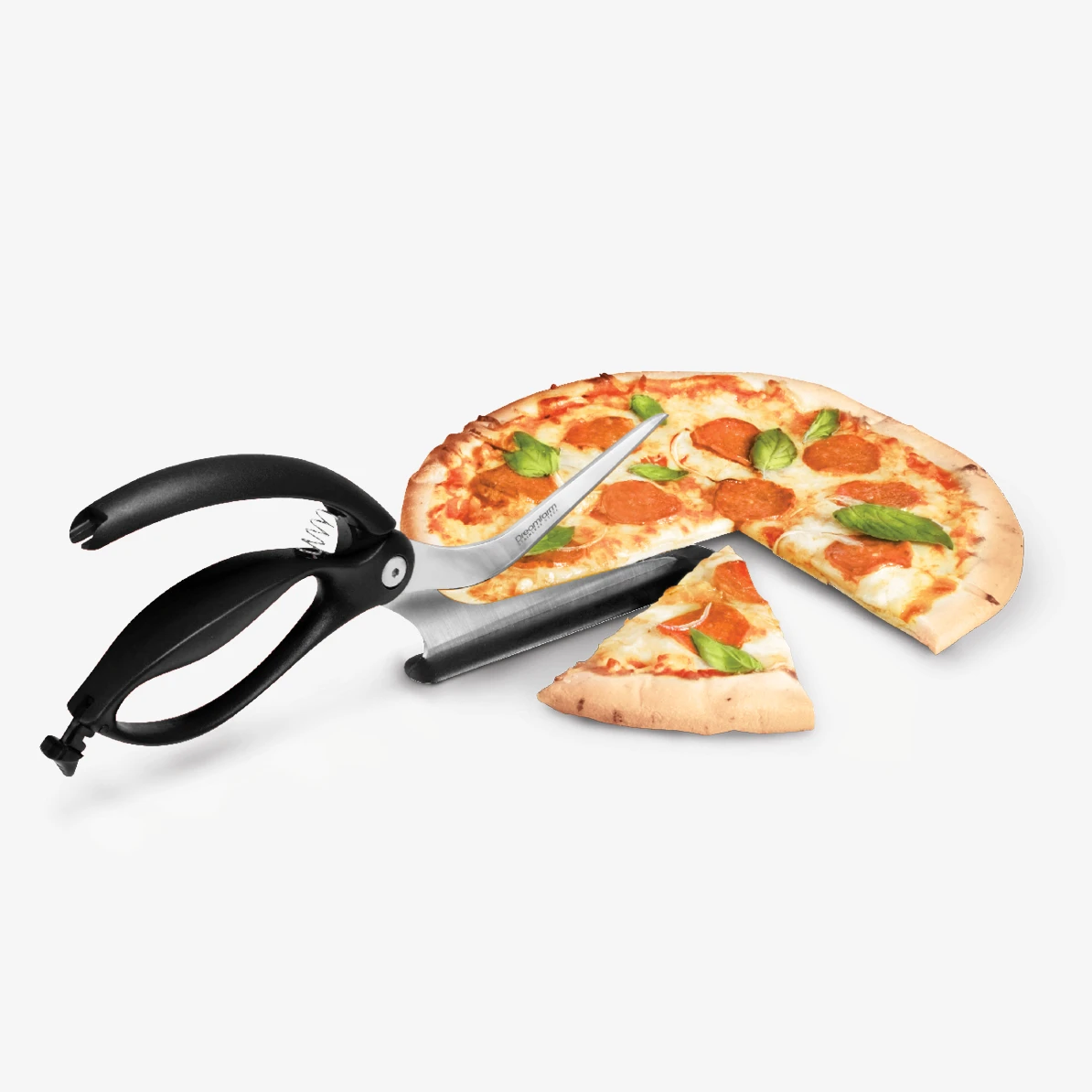
A nylon base slides under the crust and keeps the steel blades off a coated pan. It also supports the slice when you lift it to a plate.
Prices may change. Check the retailer for the current price and availability. We may earn a commission from qualifying purchases at no additional cost to you. Learn more.
Comments
Comments are reviewed before they become public.
Sign in with Google to leave a comment.
Sign in with GoogleNo approved comments yet. Be the first to start the discussion.