Compare flexible pins, molded teeth and brush size, then learn how to loosen everyday tangles without pulling from the roots.
Quick AnswerStart with the kind of tangle you get. For fine strands that catch at the ends, try flexible pins in small sections. For thick sections, look at tooth length and spacing. For curly or coily hair, detangle in conditioned sections with fingers, a wide-tooth comb or a brush intended for that texture.
Compare Your Options
| Option | Best use | What to check |
|---|
| Cushioned pin brush | Flexible pins bend as you work through loose ends. | Check for smooth, intact tips. |
| Molded detangler | Different tooth lengths can reach different layers of a section. | Choose a handle you can hold when wet. |
| Wide-tooth comb | Useful for separating conditioned curls before brushing. | Narrow teeth can stall in dense knots. |
1. Size the brush to the section
Spread a section across your palm. A large paddle can skim the surface of a thick section while leaving knots underneath. Divide the section until the teeth reach through comfortably. A small head also gives you more control behind the ears.
2. Work upward from the ends
Support the hair above a knot with one hand. Start below the knot with short passes, then move higher once the ends glide through. If the same spot catches twice, put down the brush and gently separate the strands with your fingers.
3. Check comfort and cleanup
For curly or coily hair, wet and condition the section before detangling. After use, lift shed strands off the pins and follow the brush maker’s rinsing instructions. Let a cushioned brush drain before putting it away.
Choose for Your Routine
| Your routine | What works |
|---|
| Fine hair that knots at the nape | Choose flexible pins and brush the nape as its own section. |
| Thick or curly hair on wash day | Prioritize comfortable tooth spacing and a secure wet grip. |
| Small hands or short layers | Choose a smaller head that can turn around the ears. |
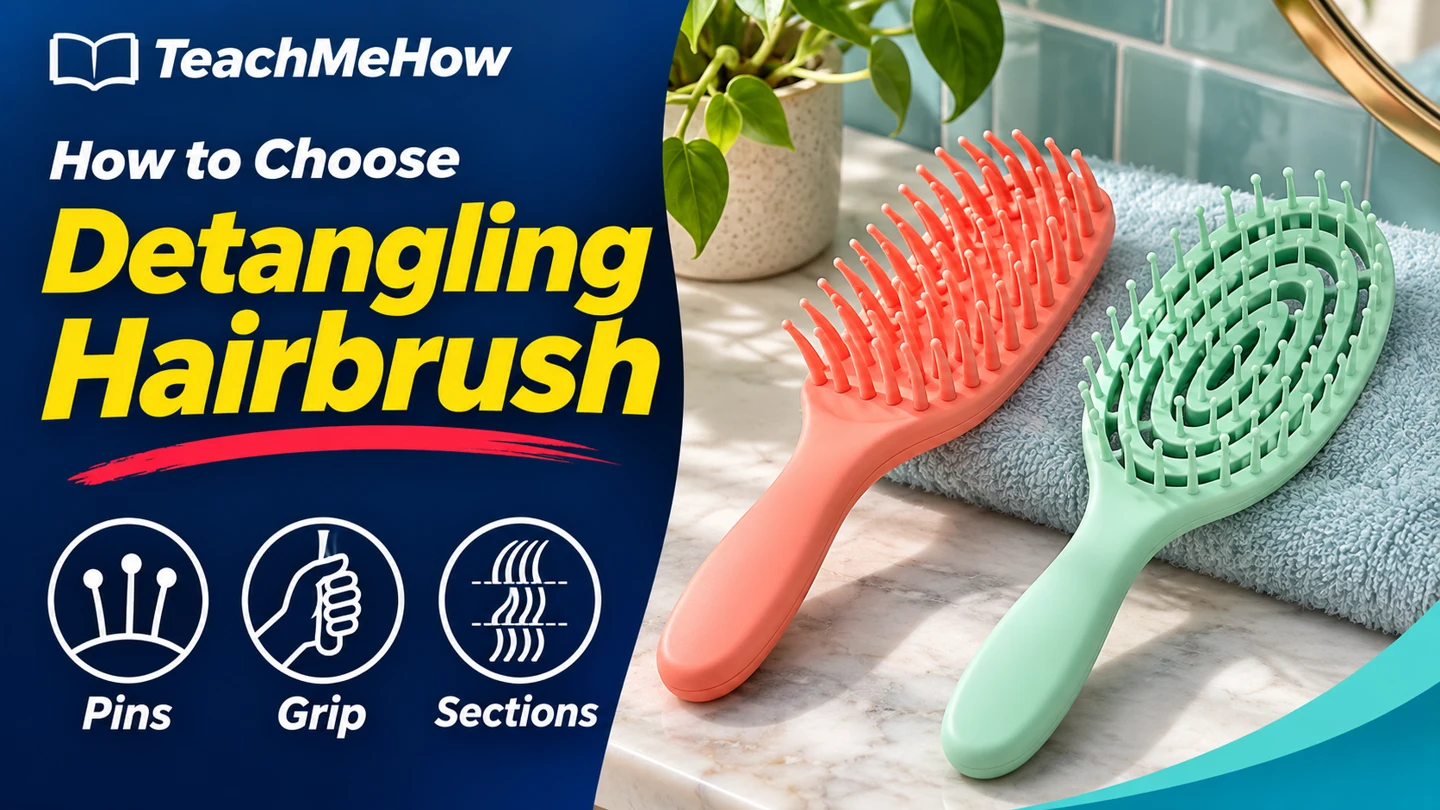
Buying TipLook at a side view of the pins before buying. Head width tells you how much surface the brush covers. Usable pin length tells you how thick a section it can reach.
Common Mistakes
- Starting at the crown and pushing one knot into the next.
- Continuing to use pins with rough ends or missing tips.
Your Checklist
- Match the teeth to your section size.
- Check the handle with damp hands.
- Choose a brush you can clean easily.
Bottom LineA brush that glides through one small section with light pressure is a better fit than a wide paddle that keeps catching.
Further Reading


Comments
Comments are reviewed before they become public.
Sign in with Google to leave a comment.
Sign in with GoogleNo approved comments yet. Be the first to start the discussion.